Where a treaty gives you residence if your passport is from Belize
One question, every country, with your nationality already applied. In 4 of them something is written that changes the answer for you; in the other 28 the general rule is what you get, and that is the answer rather than a gap. Every line is that country’s own record.
Where it changes for you
4
Where it does not
28
Blocs you are in
3
Where your nationality changes the answer
BarbadosVerified with official sourceActively changing right nowlast checked 2026-10-05
Belizean nationals: free movement in practice, the Skills Certificate in law
written for your nationality by name
The general rule it sits on
Barbados runs two things at once, and only one of them is in an Act. The statute is the Caribbean Community (Movement of Skilled Nationals) Act, Chapter 186A, rewritten by the amending Act of 2020 which commenced on the day it was assented. Under it a skilled community national who presents a qualifying certificate issued by a competent authority or Minister of any Member State is admitted for six months and may work in those six months without a work permit. For an indefinite stay the Barbados Accreditation Council verifies the certificate with the authority that issued it, tells the Chief Immigration Officer, and the Chief Immigration Officer stamps the words indefinite entry in the passport. The other thing is enhanced cooperation in free movement with Belize, Dominica and Saint Vincent and the Grenadines, running since 1 October 2025. The Ministry of Foreign Affairs, asked on its own page what laws govern free movement, lists four existing Acts and no new one. There is no Barbadian equivalent of Belize's Caribbean Community (Free Movement and Contingent Rights) Act 2026.
DominicaVerified with official sourceActively changing right nowlast checked 2026-10-05
Nationals of Belize: full free movement since 1 October 2025
written for your nationality by name
The general rule it sits on
Three regimes overlap here and they confer three different things. The CARICOM skills regime, enacted in 1995, gives a certificate holder from a qualifying member state entry for an indefinite period and the same freedom as a Dominican to move, work and buy property - but only if he holds one of the recognised qualifications, which in Dominica still means graduates, artistes, musicians, media workers and sports persons. The OECS Economic Union is different in kind: Dominica gave the Revised Treaty of Basseterre and its Protocol the force of law in 2013, so Article 12's freedom of movement for citizens of Protocol Member States is Dominican law directly, without being transposed into the Immigration Act. And since 1 October 2025 Dominica, Barbados, Belize and Saint Vincent and the Grenadines have operated full free movement among themselves - a fourth thing again, which we can describe from CARICOM and from Belize's implementing Act but not from any Dominican instrument, because none has been published.
Saint LuciaVerified with official sourceMonitor - can change2026-10-05
From Belize: a skills certificate, but not free movement
written for your nationality by name
The general rule it sits on
Saint Lucia has implemented more of the regional free movement architecture than any other country in this comparison, and it has dated every piece of it. The Economic Union Treaty and its Protocol have had the force of law here since 18 August 2014, and freedom of movement for citizens of Protocol member states is Article 12 of that Protocol. On the same day a Ministerial Order exempted them from the work permit requirement, and four months later Act 22 of 2014 exempted them from the visitor's driving permit. For the wider Caribbean Community, the Skilled Nationals Act admits a certificate holder for an indefinite period and the Movement of Factors Act of 2006 - in force on the day it was passed, with no commencement Order to wait for - gives a national of a member state the right of establishment, the right to provide services and the right to move capital. Grenada's equivalent Act was never brought into effect and Saint Vincent's has no proclamation on record. Saint Lucia's has a date printed on its face. What Saint Lucia has not done is join full free movement: a Caribbean Community national who is not a skilled national still holds an ordinary permit and still has to extend it, which is exactly what the September 2025 fee-waiver Order assumes.
Nationals of Belize: full free movement since 1 October 2025
written for your nationality by name
The general rule it sits on
Three regimes overlap, and Saint Vincent is the only country in the records here that has legislated for all three - a claim that rests on an absence in Dominica's record, which Dominica's own record marks as possibly the publisher's gap rather than Parliament's. The CARICOM skills regime came first, as Act No. 4 of 1997, and still works by category: hold a recognised qualification, hold a skills certificate, enter. The OECS Economic Union came next: Act No. 22 of 2011 gave the Revised Treaty of Basseterre and its Protocol the force of law and was brought into operation by proclamation on 10 August 2011, so a citizen of another Protocol state is given indefinite stay at the desk. And since 1 October 2025 Saint Vincent has been one of four CARICOM states - with Barbados, Belize and Dominica - operating full free movement, which drops the skills condition entirely. No Dominican instrument for it appears in the published law collection; Saint Vincent's is on the record. Parliament passed two Acts and two statutory orders on 29 September 2025 and the Governor-General assented to them the next day, the day before the regime began.
Where the general rule applies to you unchanged
Nothing is recorded in these that treats a citizen of Belize differently on this question, so what follows is what everyone gets.

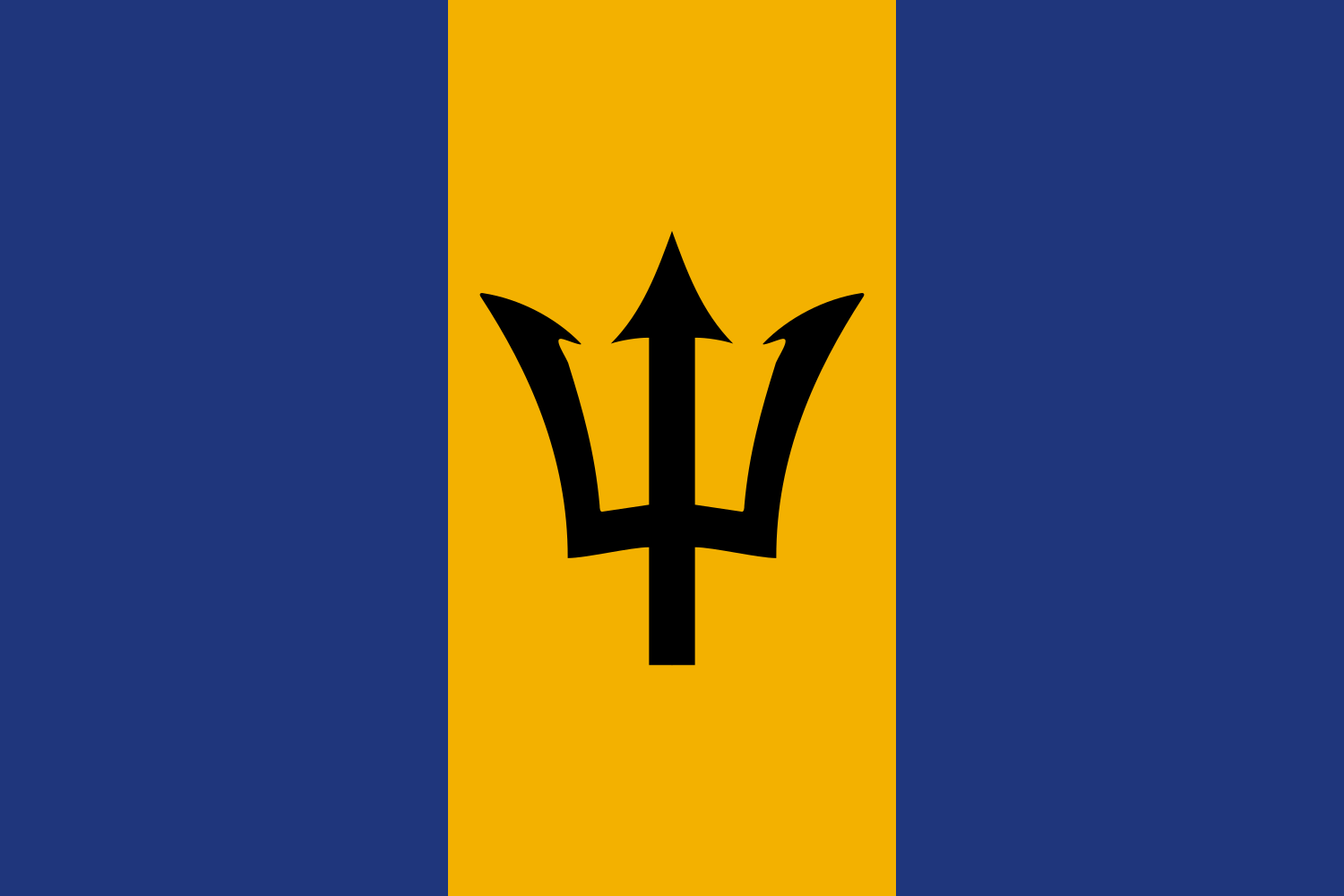 BarbadosVerified with official sourceActively changing right nowlast checked 2026-10-05
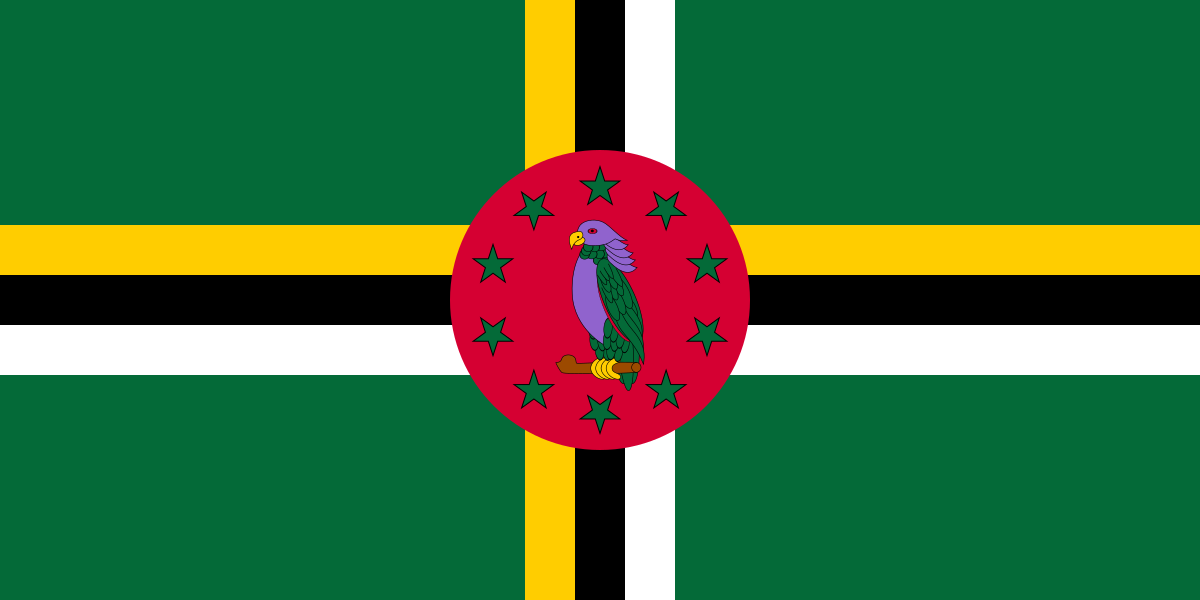 Dominica
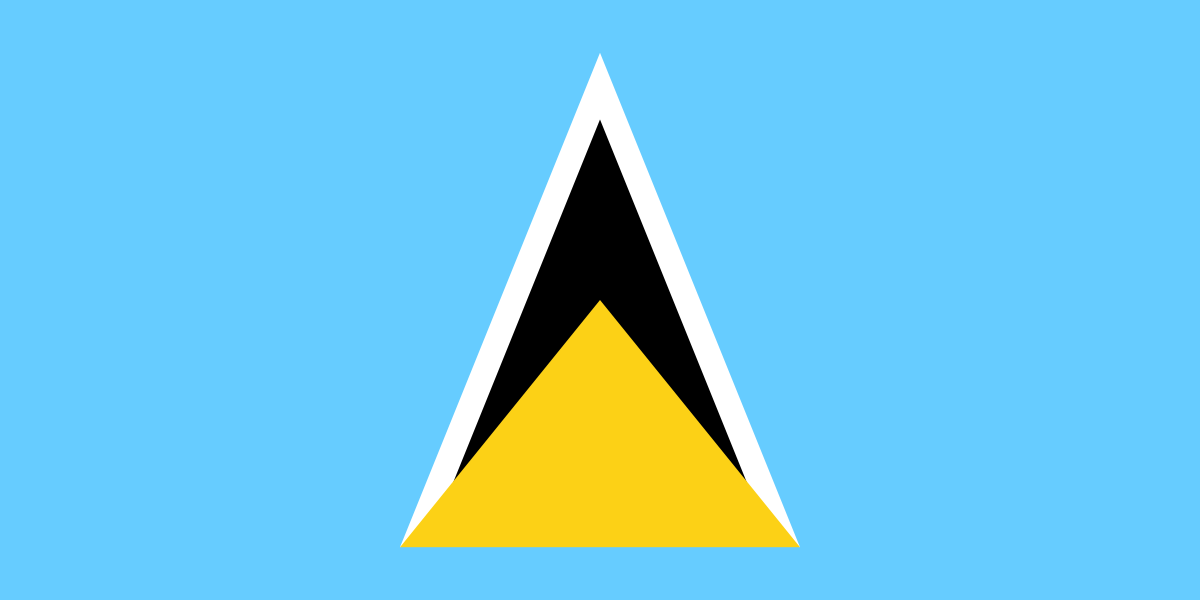 Saint Lucia
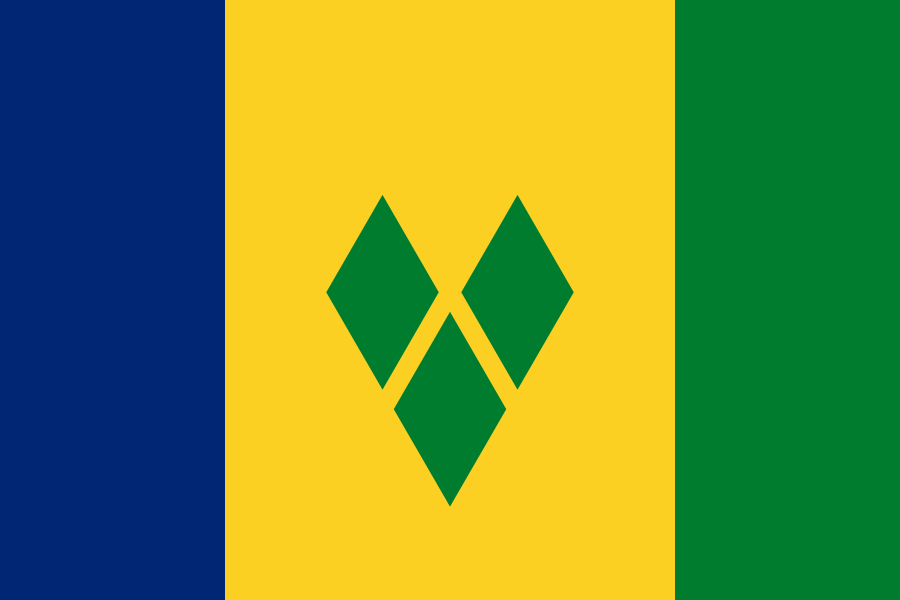 Saint Vincent and the Grenadines
 Antigua and Barbuda
 Argentina
 Bolivia
 Brazil
 Chile
Chile Colombia
 Costa Rica
 Cuba
Cuba Dominican Republic
 Ecuador
 El Salvador
 Grenada
 Guatemala
 Guyana
 Haiti
Haiti Honduras
 Jamaica
 Mexico
 Nicaragua
 Panama
 Paraguay
 Peru
Peru Saint Kitts and Nevis
 Suriname
 The Bahamas
 Trinidad and Tobago
 Uruguay
 Venezuela