Where you can move for work if your passport is from Trinidad and Tobago
One question, every country, with your nationality already applied. In 6 of them something is written that changes the answer for you; in the other 27 the general rule is what you get, and that is the answer rather than a gap. Every line is that country’s own record.
Where it changes for you
6
Where it does not
27
Blocs you are in
3
Where your nationality changes the answer
BarbadosVerified with official sourceMonitor - can change2026-10-05
The Restrictions Fall Away for You and Stay in Place for Your Family
reaches you through CARICOM skills certificate
The general rule it sits on
Section 17 of the Immigration Act is the work permit rule, and the interesting part of it is who it does not apply to. As it stands since 2020 it bites on everyone except a citizen, a permanent resident, an immigrant, and a national of a CARICOM Member State to whom the Revised Treaty's right of establishment, provision of services or free movement articles apply. That exemption is not aspirational: it was written into the Immigration Act by the schedule of consequential amendments to the Caribbean Community (Movement of Skilled Nationals) (Amendment) Act, 2020-3, which commenced on the day it was assented. Everyone else needs a permit from the Minister. The Department grants short-term permits up to eleven months and long-term permits up to three years, charges a $300 application fee, and sets the final fee by a monthly scale in the Regulations that prices a job differently depending on whether the holder is a Caribbean national or a citizen of another country.
BelizeVerified with official sourceMonitor - can change2026-10-05
Work, a Home, and a Business Premises - and a Revocation Clause Written Backwards
reaches you through CARICOM skills certificate
The general rule it sits on
Belize issues a Temporary Employment Permit, and the striking thing about it is that you have to be in the country already to get one. The Immigration Department says so plainly: apply at a Labour Department office, and you need to be residing in Belize when you do. The employer files for an employee; a self-employed person files for themselves. The permit is priced by the kind of work rather than by the applicant's nationality, from BZ$150 for a season of agricultural work to BZ$3,000 a year for a professional. Two of the fourteen prices the Immigration Department publishes do not match the fee schedule in the regulations, and in both cases the Department's figure is the higher one.
GrenadaVerified with official sourceMonitor - can change2026-10-05
No Restriction on Gainful Employment, and None on Buying Somewhere to Live
reaches you through CARICOM skills certificate
The general rule it sits on
A work permit is not issued under the Immigration Act at all. It comes from a separate 1968 statute, the Foreign Nationals and Commonwealth Citizens (Employment) Act, which makes it an offence for a foreign national or a Commonwealth citizen to work without one and for anyone to employ them. The Minister of Labour decides in his absolute discretion; permits run twelve months and the fee is set by nationality - nothing for a CARICOM skills certificate holder and for a citizen of five named Eastern Caribbean states, EC$1,000 for a short list of CARICOM countries and Cuba, EC$3,000 for other Commonwealth, European and American nationals, EC$5,000 for everyone else. The Ministry's own guidance adds categories, deadlines and an advertising requirement that the Act does not contain.
JamaicaVerified with official sourceMonitor - can change2026-10-06
Caribbean Community nationals and the work permit
reaches you through CARICOM skills certificate
The general rule it sits on
Work in Jamaica runs on a permit issued by the Minister of Labour under the Foreign Nationals and Commonwealth Citizens (Employment) Act, and the permit is issued to the worker in the worker's own name while naming the employer and the place of work - so it does not travel with you to a new job. Both the worker and anyone who employs a worker without one commit an offence. Two groups fall outside the requirement. Caribbean Community nationals exercising rights of establishment, providing services or moving capital are exempted by a Schedule that an Act of 2011 wrote into the Act. Holders of a Caribbean Community skills certificate are outside it under a different Act altogether. Everyone else needs the permit, and the Ministry publishes no fee for it - only the statement that one is payable by the employer on approval.
No Restriction on Working, Measured Against What a Kittitian May Do
reaches you through CARICOM skills certificate
The general rule it sits on
Work is permit-first and employer-led, and the Act puts a condition on it that most countries put in guidance: the application must be made while the prospective employee is outside the Federation. You cannot arrive as a visitor, find a job and regularise - except on renewal, or where the Minister directs otherwise by Order. The permit itself carries the status: holders are entitled to a work permit holder's residency, and their spouses and minor children can be granted temporary residence. The Minister may also require the employer to post security sufficient to repatriate the worker and the family, and until that security is furnished the permit has no effect at all.
Saint LuciaVerified with official sourceMonitor - can change2026-10-05
Work on the Footing of a Saint Lucian, and Nothing in the Section About Property
reaches you through CARICOM skills certificate
The general rule it sits on
Two permissions, from two Ministers, under two Acts. The immigration officer writes a permit under section 12 of the Immigration Act for the purpose of employment, capped at six months and extendable only to a year from entry. The work itself needs a work permit under Part 6 of the Labour Act, granted or refused by the Minister and cancellable on thirty days' notice. Three groups do not need the work permit: a citizen of an Eastern Caribbean Protocol member state, exempted by Order since 18 August 2014 unless they bought that citizenship; the holder of a Caribbean Community skills certificate, who may not be subjected to any restriction on gainful employment that would not apply to a Saint Lucian; and a person who holds a permit entitling them to reside permanently. The Immigration Act also puts the cost of a failed posting on the employer: if an employee admitted under a contract becomes removable, the first employer pays the whole bill for maintenance, transport and deportation.
Where the general rule applies to you unchanged
Nothing is recorded in these that treats a citizen of Trinidad and Tobago differently on this question, so what follows is what everyone gets.

 BarbadosVerified with official sourceMonitor - can change2026-10-05
 Belize
 Grenada
 Jamaica
 Saint Kitts and Nevis
 Saint Lucia
 Antigua and Barbuda
 Argentina
 Bolivia
 Brazil
 Chile
Chile Colombia
 Costa Rica
 Cuba
Cuba Dominica
 Dominican Republic
 Ecuador
 El Salvador
 Guatemala
 Guyana
 Haiti
Haiti Honduras
 Mexico
 Nicaragua
 Panama
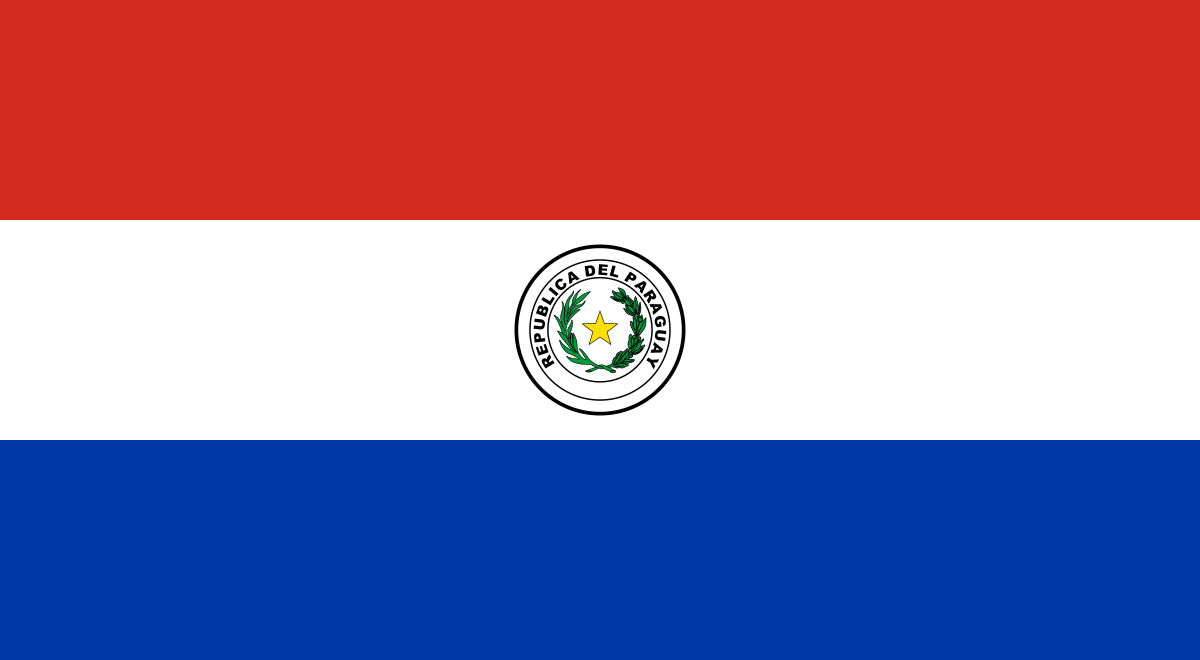 Paraguay
 Peru
Peru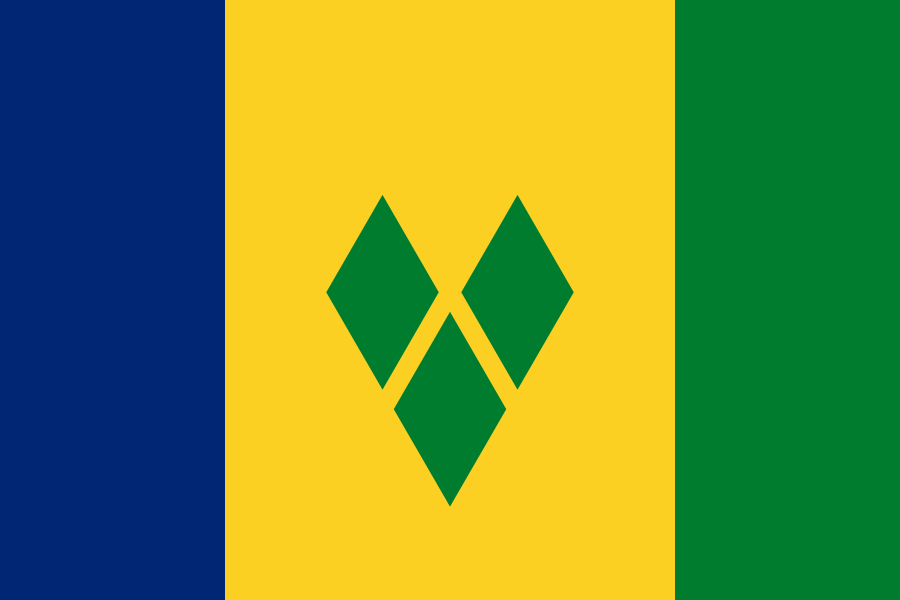 Saint Vincent and the Grenadines
 Spain
Spain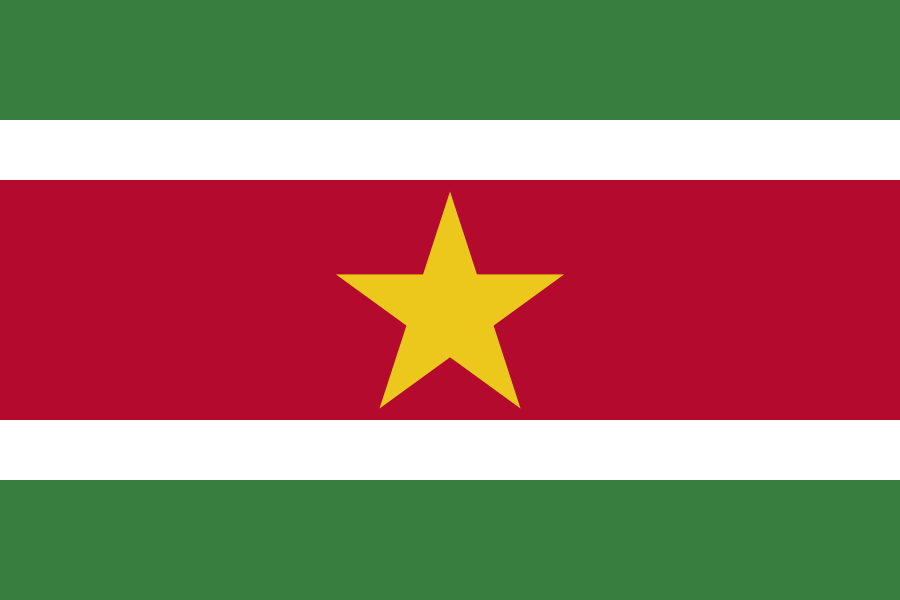 Suriname
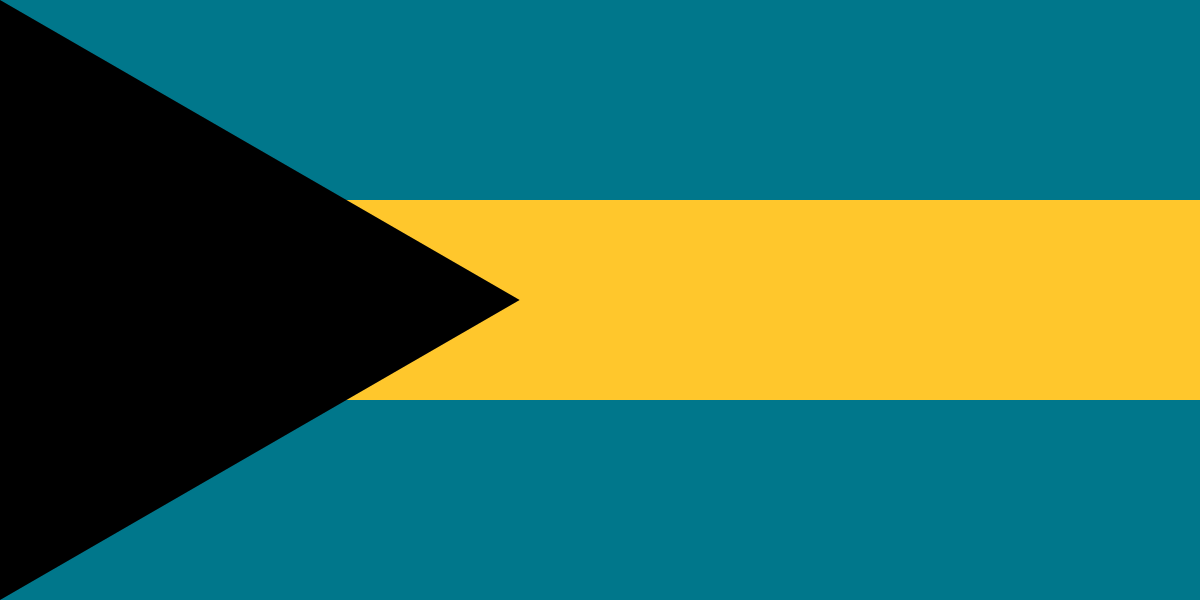 The Bahamas
 Uruguay
 Venezuela