Where you can go as a visitor if your passport is from the United States
One question, every country, with your nationality already applied. In 3 of them something is written that changes the answer for you; in the other 30 the general rule is what you get, and that is the answer rather than a gap. Every line is that country’s own record.
Where it changes for you
3
Where it does not
30
Blocs you are in
1
Where your nationality changes the answer
BoliviaVerified with official sourceMonitor - can change2026-09-27
United States Citizens: a USD 160 Entry Authorisation
written for your nationality by name
The general rule it sits on
Bolivia sorts nationalities into three groups. The first needs no tourist visa and is admitted on a national identity document or a passport. The second needs a visa. The third needs a visa that a consulate may only issue after the migration directorate has checked the file. A tourist visa is granted for 30 days, and inside Bolivia it can be extended by up to 60 more; but the regulation also caps a tourist at 90 calendar days a year, which is the number that decides how long you can actually stay. Bolivia does not publish which countries sit in which group.
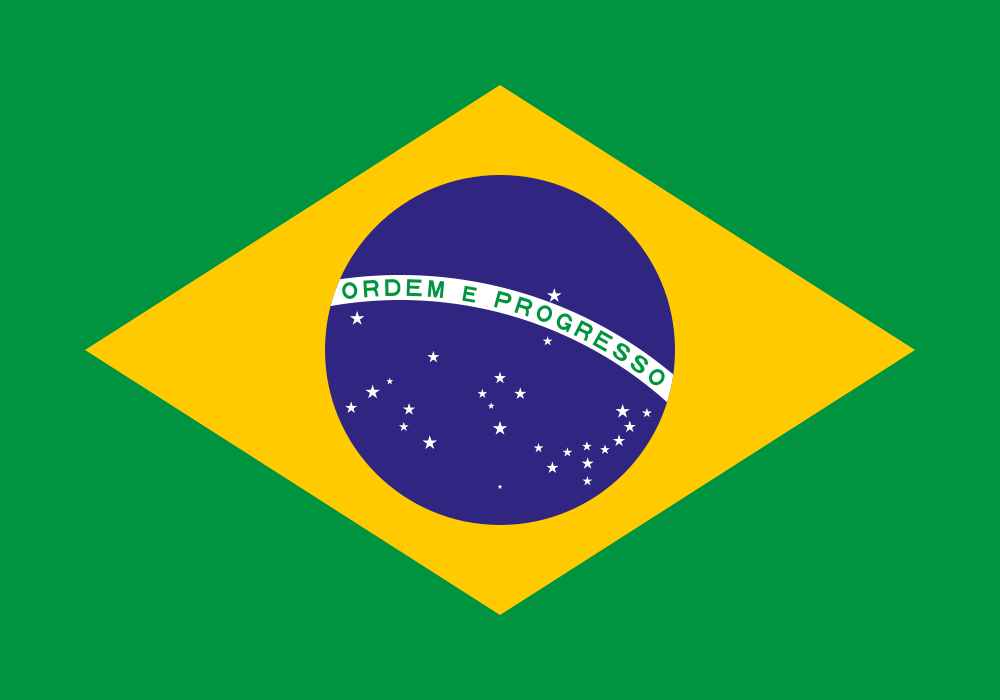
BrazilVerified with official sourceMonitor - can change2026-09-27
United States Nationals Need a Visa Again
written for your nationality by name
The general rule it sits on
A visit visa, or a waiver where your nationality has one, buys up to 90 days, which the Federal Police may extend by up to 90 more. The ceiling is 180 days in a migratory year, and the regulation defines a migratory year as twelve months from your own first entry, so the clock is personal rather than a calendar. Two details are usually lost. The extension is available only to nationals of countries that give Brazilians the same treatment, so the second 90 days is not a general right. And the foreign ministry's own visa table marks many European nationalities with an asterisk meaning a maximum of 90 days in any 180 - stricter than the decree, and the number actually applied at the border. Unlike most of its neighbours, Brazil lets a visitor apply for residency without leaving.
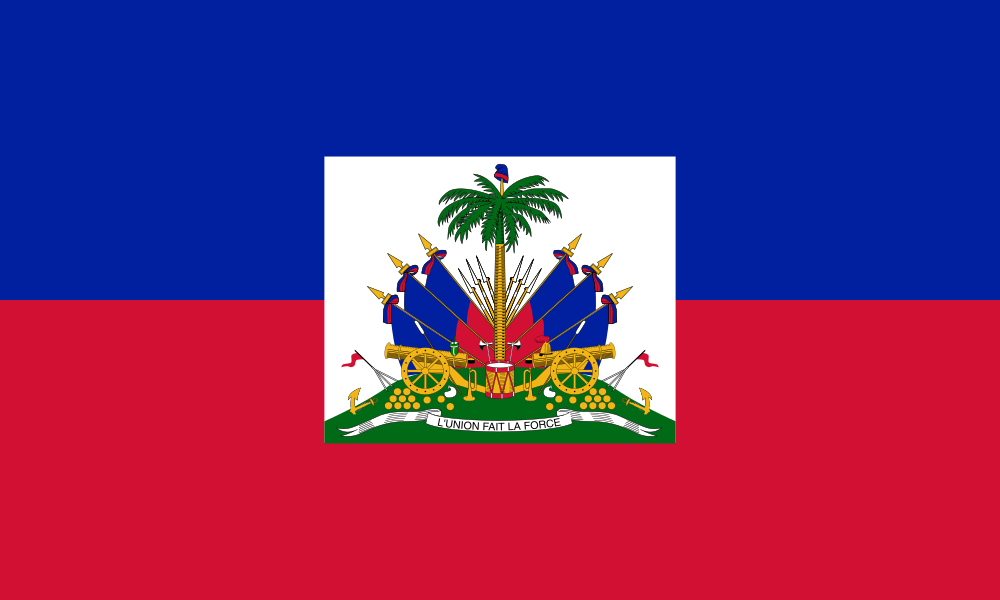
HaitiVerified with official sourceActively changing right nowlast checked 2026-10-06
United States citizens: named in the statute, thirty days on a card instead of a consular visa
written for your nationality by name
The general rule it sits on
The instrument still on the books gives a visitor thirty days. Haiti's missions tell travellers ninety. The Loi du 8 décembre 1959 sur l'immigration et l'émigration rewrote article 16 of the immigration law so that American and Canadian tourists, and nationals of countries that have an agreement with Haiti waiving passport or visa formalities, may enter on a simple card and stay thirty days; everyone else buys a visa from a Haitian consulate. Haiti's own embassy in Canada describes something different and larger: no prior visa for a Canadian staying under ninety days, entry formalities settled on arrival at any international airport or land border, and a ninety-day "séjour de courtoisie" after which a residence permit becomes compulsory. Both are Haitian government statements and they do not say the same thing. The statute also makes leaving a formality: article 43 requires an exit visa of any foreigner subject to an entry visa who has been in the country more than seventy-two hours.
Where the general rule applies to you unchanged
Nothing is recorded in these that treats a citizen of United States differently on this question, so what follows is what everyone gets.
Antigua and Barbuda, The Bahamas, Barbados, Belize, Dominica, Grenada, Jamaica, Montserrat, Saint Christopher and Nevis, Saint Lucia, St. Vincent and the Grenadines, Suriname, Trinidad and Tobago

 BoliviaVerified with official sourceMonitor - can change2026-09-27
 Brazil
 Haiti
Haiti Antigua and Barbuda
 Argentina
 Barbados
 Belize
 Chile
Chile Colombia
 Costa Rica
 Cuba
Cuba Dominica
 Dominican Republic
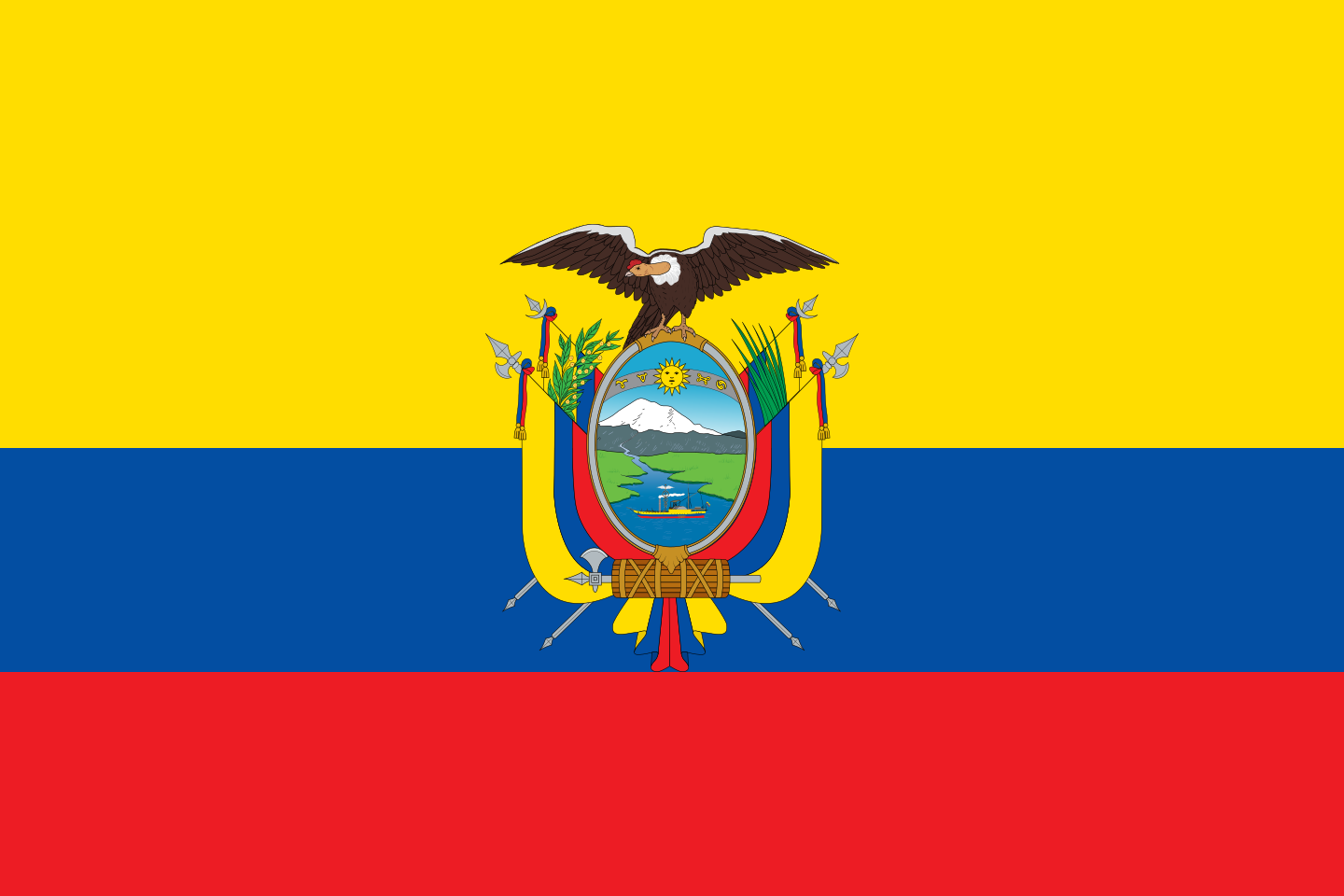 Ecuador
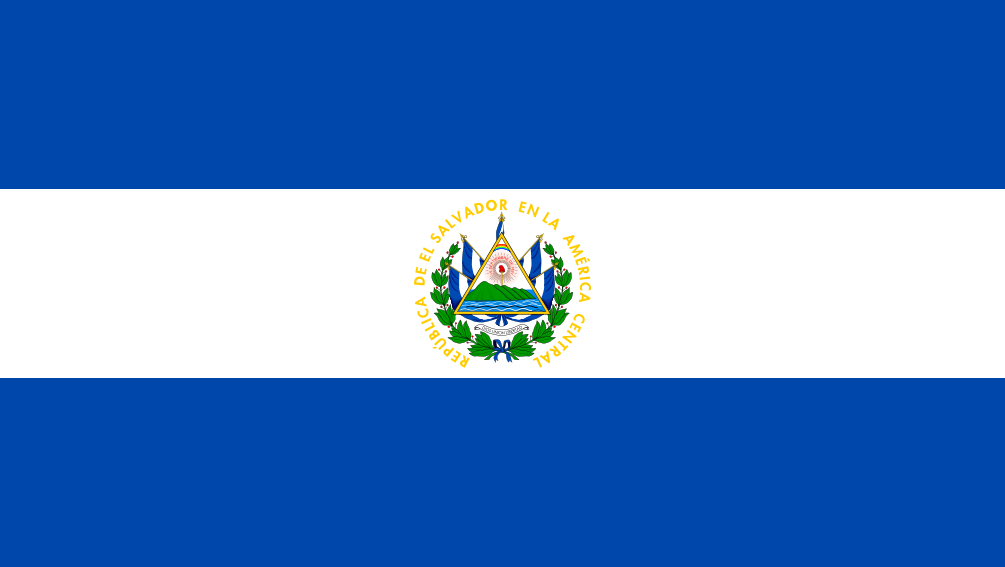 El Salvador
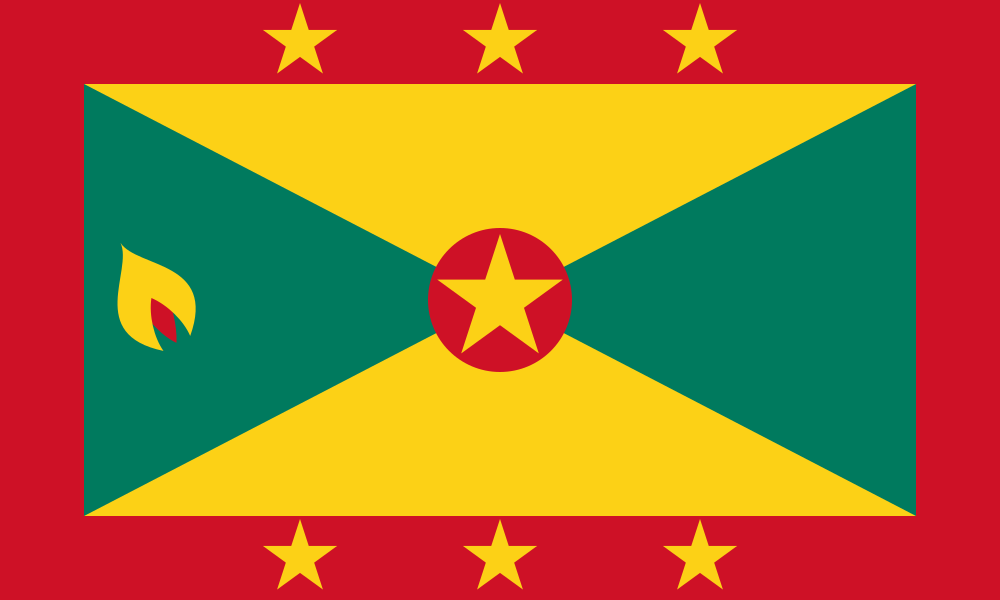 Grenada
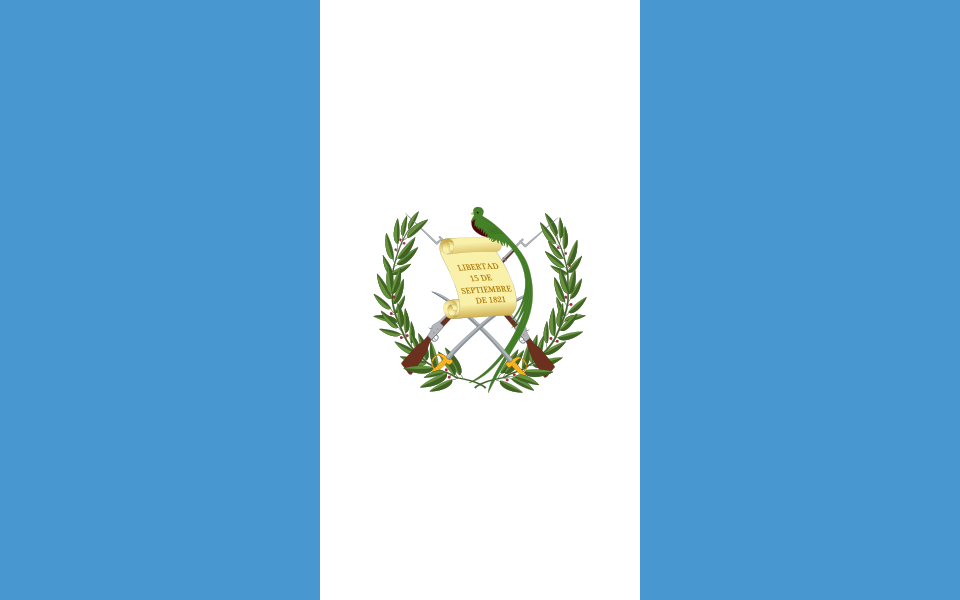 Guatemala
 Guyana
 Honduras
 Jamaica
 Mexico
 Nicaragua
 Panama
 Paraguay
 Peru
Peru Saint Kitts and Nevis
 Saint Lucia
 Saint Vincent and the Grenadines
 Suriname
 The Bahamas
 Trinidad and Tobago
 Uruguay
 Venezuela