Where you can become a citizen if your passport is from Honduras
One question, every country, with your nationality already applied. In 4 of them something is written that changes the answer for you; in the other 28 the general rule is what you get, and that is the answer rather than a gap. Every line is that country’s own record.
Where it changes for you
4
Where it does not
28
Blocs you are in
1
Where your nationality changes the answer
El SalvadorVerified with official sourceMonitor - can change2026-10-04
Central Americans Become Salvadoran by Birth, Not by Naturalisation
reaches you through CA-4
The general rule it sits on
Five years of residence for anyone, one year for Spaniards and Spanish Americans, two for the spouse of a Salvadoran - and separately, for Central Americans, a route that is not naturalisation at all but a declaration of Salvadoran nationality by birth. The Constitution sets the periods and the migration law repeats them, with one difference that matters: the Constitution says 'residencia' and the law, since the 2023 rewrite, says 'residencia definitiva' for the one-year Spanish and Spanish American route while counting temporary and permanent residence together for the five-year and two-year ones. The 2023 rewrite also added a fifth ground the Constitution does not contain, for foreigners meeting the requirements of government investor or donor programmes. The requirement most likely to stop an application is documentary rather than temporal: the file must include a certificate from the applicant's own country stating that that country permits dual nationality. Naturalised status is the weaker kind - it is lost by two consecutive years back in the country of origin or five years anywhere abroad, and by a final conviction for a serious intentional crime, after which it can never be recovered.
GuatemalaVerified with official sourceStable2026-10-04
A Honduran by Birth Can Become a Guatemalan of Origin
written for your nationality by name
The general rule it sits on
Guatemala has two doors, and they are not the same door at different speeds. Naturalisation is the ordinary one, and the Constitution delegates its terms entirely to a statute - the conditions, the residence period and the procedure are not in the Constitution and are not in the Migration Code either. The other door is constitutional and far wider than any naturalisation: a national by birth of a republic of the old Central American Federation who takes up domicile in Guatemala and declares before a competent authority that they wish to be Guatemalan is a Guatemalan of origin, not a naturalised one, and may keep their first nationality. Residence itself carries the right to opt for nationality, and a resident who obtains it has to go back to the migration institute and cancel their residence.
NicaraguaVerified with official sourceActively changing right nowlast checked 2026-10-05
Naturalisation for Hondurans
written for your nationality by name
The general rule it sits on
Four years as a permanent resident is the ordinary wait, and the price is your own nationality: the law requires renunciation before the grant, and the Constitution says the same. Four groups halve the wait to two years - Spaniards, Central Americans of origin, the spouse of a Nicaraguan, and foreigners who have established an industry or who have Nicaraguan children - and two of those four are also excused the renunciation. The grant is discretionary in terms, described in the regulation as a sovereign act, and takes legal effect only when published in La Gaceta. The constitutional ground shifted under this in February 2025: the new text dropped the enumeration of who is a national by birth and the guarantee that no national may be deprived of nationality, keeping only the clauses on naturalisation, on traitors to the homeland, and on not losing nationality by acquiring another.
PanamaVerified with official sourceMonitor - can change2026-10-04
Honduras: 2 years of Permanent Residence Instead of Five
written for your nationality by name
The general rule it sits on
Five consecutive years of residence, counted not from arrival but from the resolution that granted permanent residence - which means the two provisional years most routes impose do not count. Three years instead of five if you have a Panamanian spouse or Panamanian children. The decision belongs to the President rather than to an agency, the refusal cannot be appealed, and the Constitution requires express renunciation of your existing nationality. A Spanish or Latin American national can do it on whatever terms their own country gives Panamanians, which for nine countries the migration service publishes as a shorter list of years.
Where the general rule applies to you unchanged
Nothing is recorded in these that treats a citizen of Honduras differently on this question, so what follows is what everyone gets.

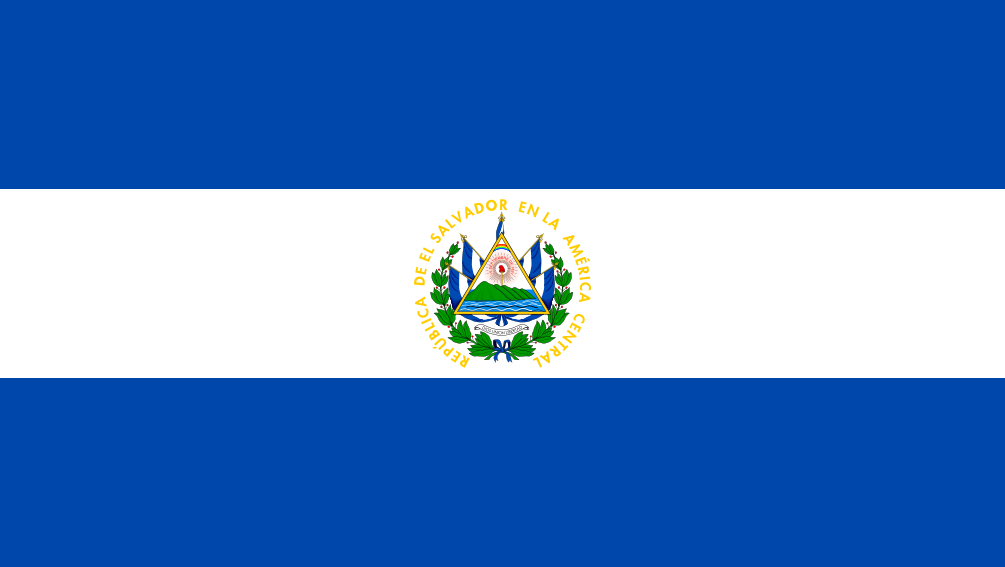 El SalvadorVerified with official sourceMonitor - can change2026-10-04
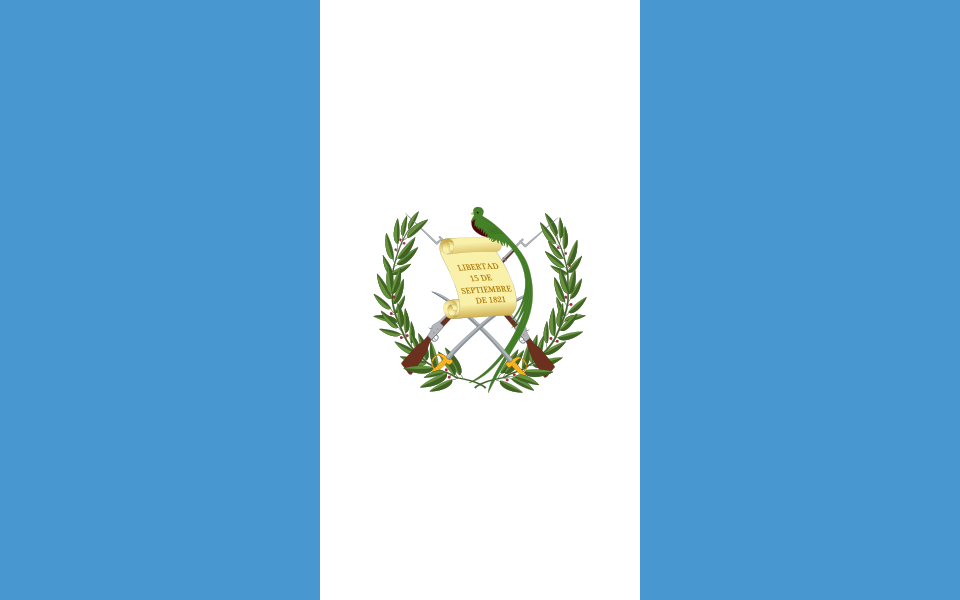 Guatemala
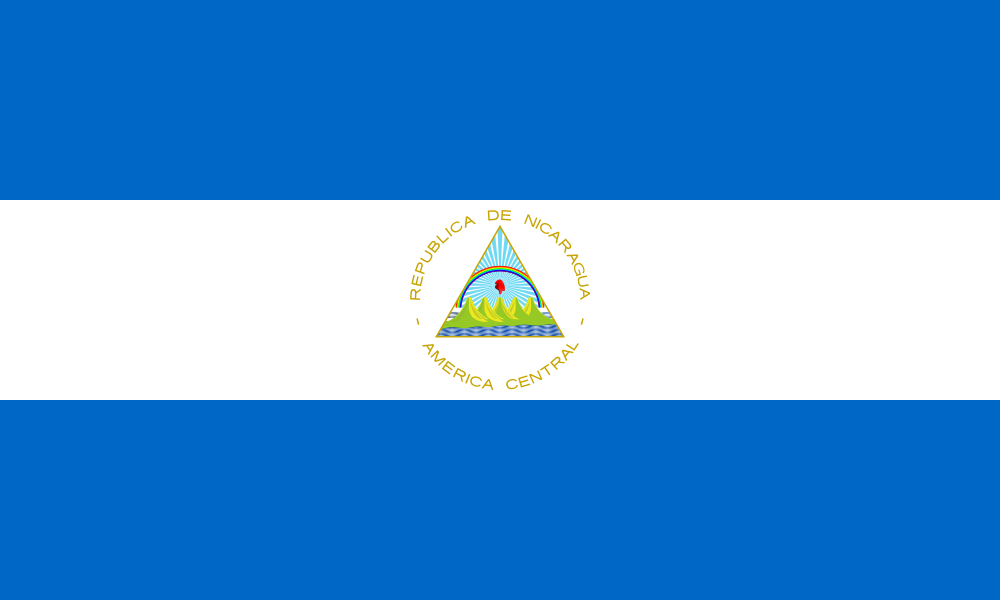 Nicaragua
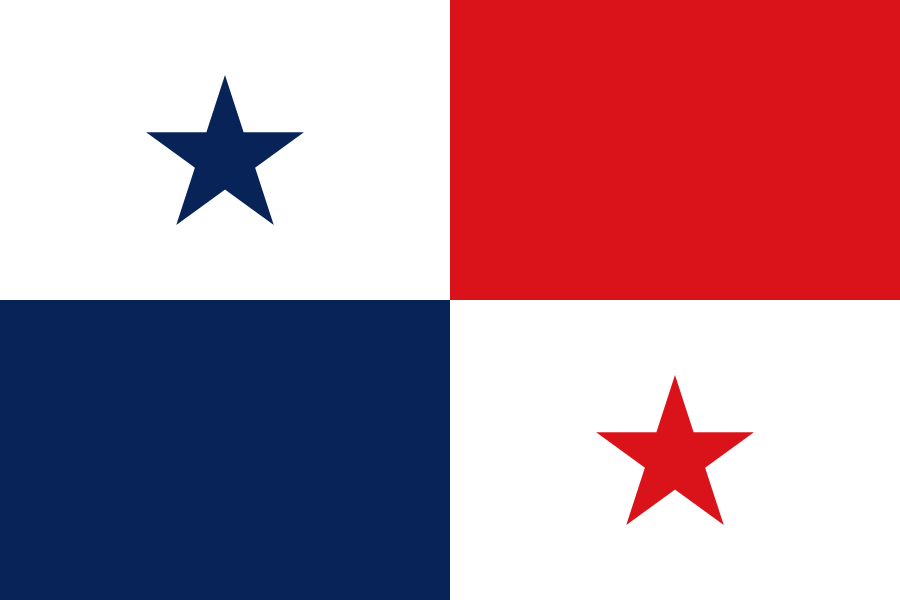 Panama
 Antigua and Barbuda
 Argentina
 Barbados
 Belize
 Bolivia
 Brazil
 Chile
Chile Colombia
 Costa Rica
 Cuba
Cuba Dominica
 Dominican Republic
 Ecuador
 Grenada
 Guyana
 Haiti
Haiti Jamaica
 Mexico
 Paraguay
 Peru
Peru Saint Kitts and Nevis
 Saint Lucia
 Saint Vincent and the Grenadines
 Suriname
 The Bahamas
 Trinidad and Tobago
 Uruguay
 Venezuela