
The Caribbean Community
Fourteen of the fifteen members are covered here, and the finding that runs through all of them is that the Community decides less than its own literature suggests. Free movement of skilled nationals is not one regime: it is a model statute that seven states enacted differently, and they disagree about who it reaches, what the certificate lets you do and what happens at the border. Four states went further in 2025 and opened full free movement to each other, and only one of them legislated for it. Everything else - naturalisation, health, tax, driving - is national.
Decided for every member
One instrument, the same answer in each member state. The quotations are on the country records; these rows say which instrument and where to read it.
The Community sets the framework; what a reader actually gets is in the destination's statute, and those statutes do not agree.
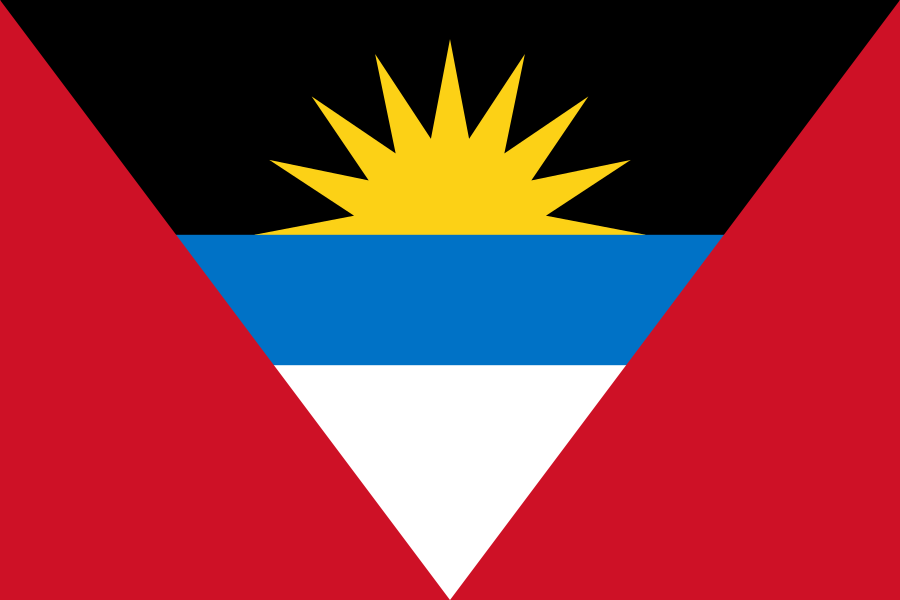 Antigua And Barbuda
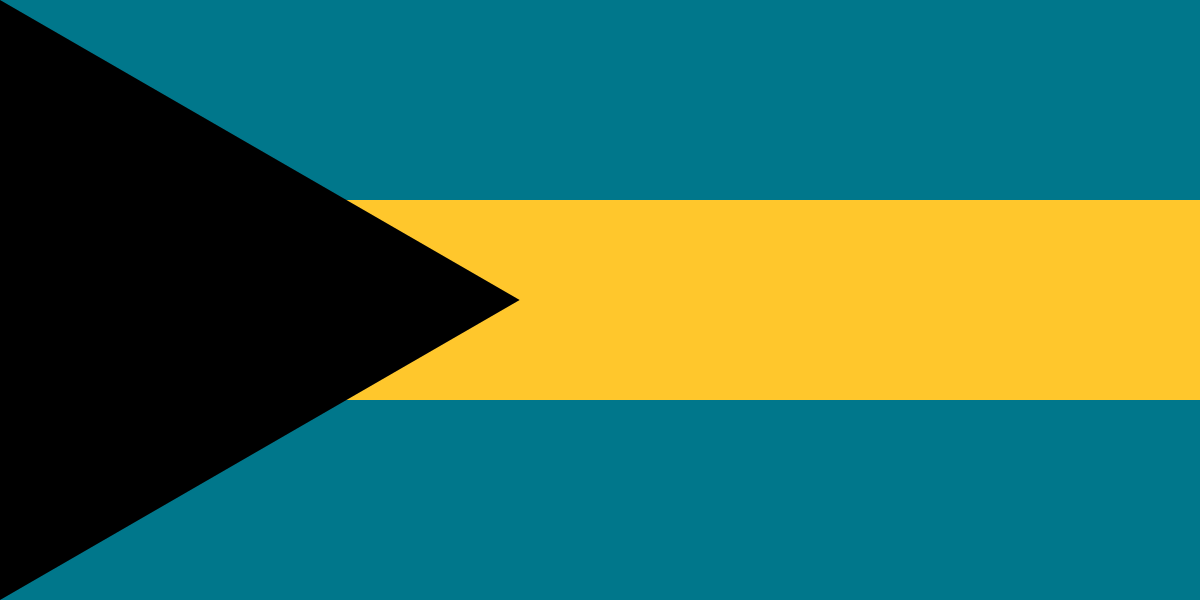 The Bahamas
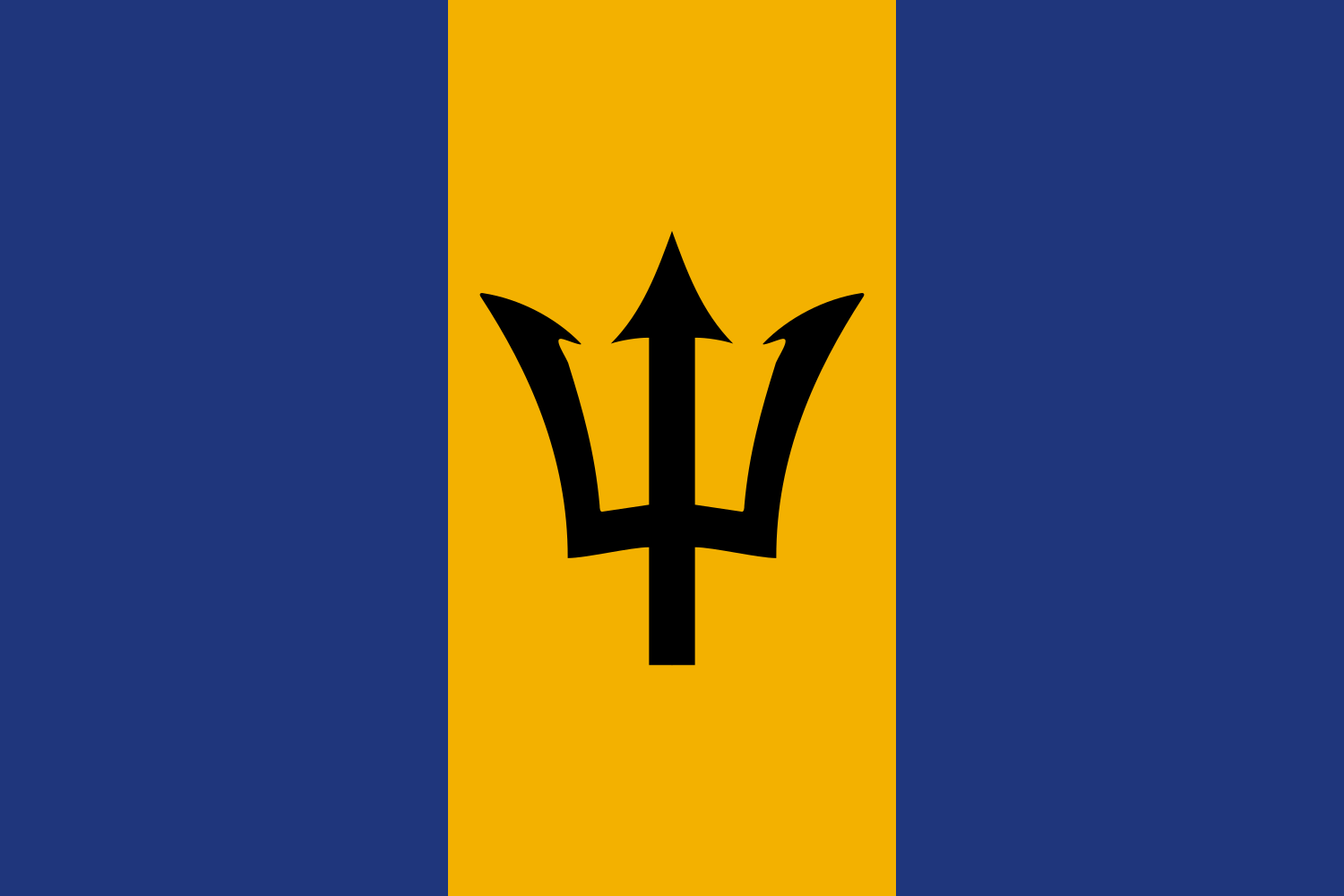 Barbados
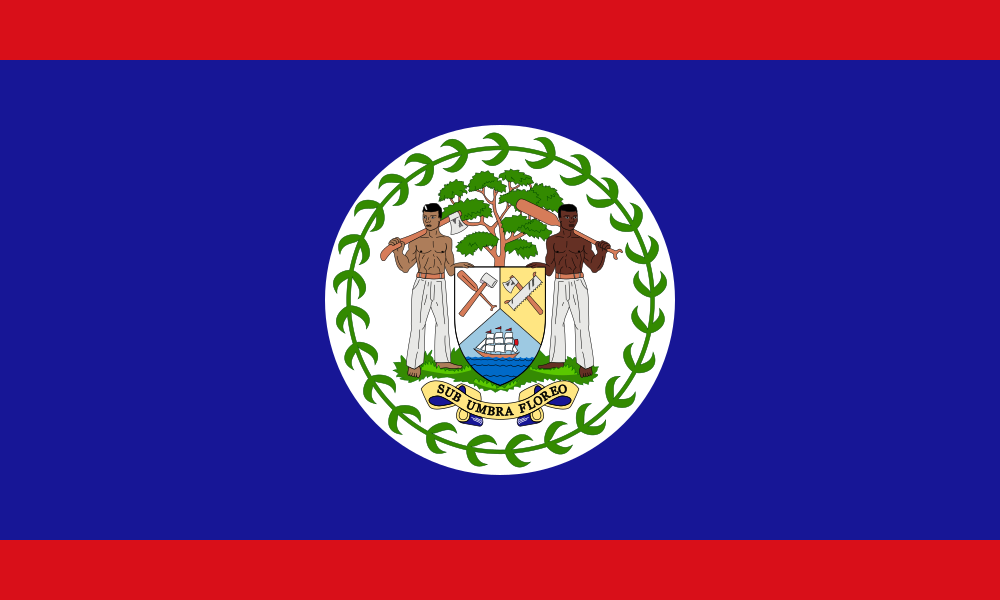 Belize
 Dominica
 Grenada
 Guyana
 Haiti
Haiti Jamaica
 Saint Kitts And Nevis
 Saint Lucia
 Saint Vincent And The Grenadines
 Suriname
 Trinidad And Tobago
A certificate, and what it removes. Recorded per destination because each Act removes a different set of restrictions.
Left to each member
Where the bloc stops. These are the questions a reader has to ask country by country, and the note says what the records here show about the spread.
National, and the shape of it differs: six months in some states, an indefinite stay on the right certificate in others, and a two-step grant in Saint Christopher and Nevis.
National. Where a Community entitlement exists it is usually stated by a ministry rather than enacted, and the records say which is which.
Entirely national. Several states offer registration rather than naturalisation to Commonwealth citizens, which is a wider class than the Community.
National. Belize's 2026 Act is the only one in the corpus that moves a vehicle and the tools of a trade on nationality.
One model statute, seven parliaments, no two the same
Each skilled-nationals Act carries its own schedule of qualifying states and they are not the same list: Barbados names Haiti and not Montserrat, Grenada and Saint Christopher and Nevis name Montserrat and not Haiti, Belize names neither Trinidad and Tobago nor the three states it moved to a newer Act. What the certificate then lets you do differs too - Grenada removes four restrictions, Saint Christopher and Nevis three, Saint Lucia two, and Barbados names none and points at another statute.
Full free movement, and only Belize wrote it down
Barbados, Belize, Dominica and Saint Vincent and the Grenadines opened full free movement to each other on 1 October 2025. Belize passed an Act creating an Indefinite Stay Stamp and a statutory appeal. Saint Vincent legislated two days before the regime began and does not publish the instruments. Barbados did not legislate at all and says so in its own launch material. Dominica's published collection has no corresponding Act. The asymmetry is the finding: a Barbadian refused entry to Belize has a statutory appeal; a Belizean refused entry to Barbados has a complaints procedure.
Health is announced more often than it is enacted
Several states tell Community nationals they have access to care on the same basis as a national, and most of them say it through a foreign ministry rather than an instrument. Belize is the exception that proves the pattern - it legislated the entitlement - and its Act reaches three states, not the Community.
The nationality lists it produces
A bloc is a group of destinations; these are the groups of nationalities it creates, and they are not the same thing.
- CARICOM Member States · 15 nationalities
- CARICOM skills certificate · 12 nationalities
- CARICOM full free movement (enhanced cooperation) · 4 nationalities
- OECS Protocol member states · 6 nationalities