One question, 33answers, each one the country’s own record. The labels below are the ones its own instruments use rather than a vocabulary we imposed on them: where one country’s law has no equivalent of another’s test, the row is simply absent, because an empty cell would invent a comparison nobody made. Every line opens onto the law it rests on.
Countries answered
33
Exceptions by nationality
0
Oldest check
2026-09-21
Newest check
2026-10-06
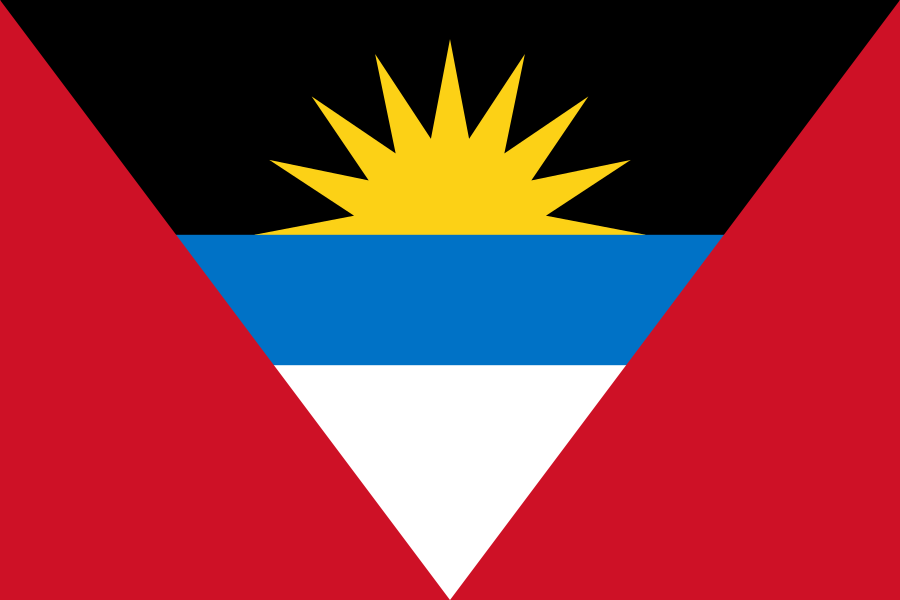
Antigua and BarbudaCaribbeanVerified with official sourceMonitor - can change2026-10-05
Marriage opens two doors at different speeds. One year of marriage opens the residence permit in section 47 of the Immigration and Passport Act 2014, and that permit carries the right to remain and work in any occupation for as long as the marriage subsists - a broader work right than a permanent resident's. Three years of marriage opens registration as a citizen under section 114(1)(b) of the Constitution, and that is an entitlement rather than a discretion. Between the two sits a protective apparatus added in 2021: the applicant must swear that the marriage is not a marriage of convenience, the Chief Immigration Officer must be satisfied of the same, entering into one is a criminal offence, and so is solemnising a marriage you have reasonable grounds to suspect is one.
Marriage before a residence permit
1 year
Marriage before registration as a citizen
Upwards of 3 years
Right to work on the spousal permit
Any occupation, while the marriage subsists
Residence permit validity
3 years
Alternative to four years of residence
1 year in a marital unionas of 2021-09-07
Revocation window after the grant
3 yearsas of 2021-09-07
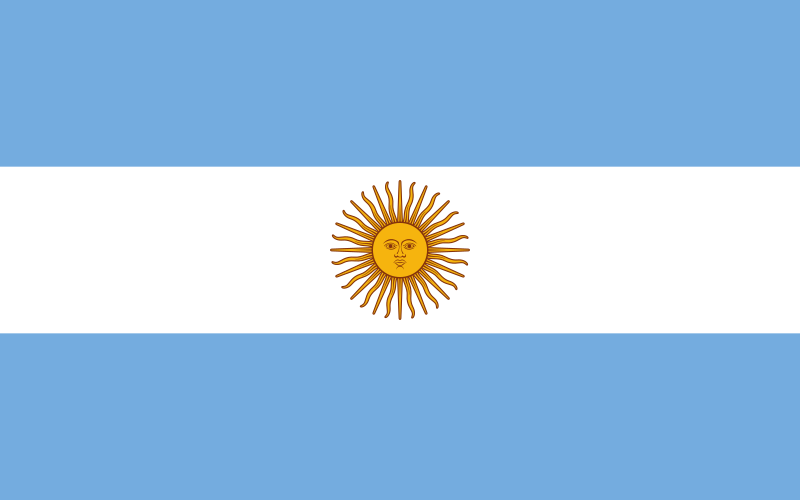
ArgentinaSouth AmericaVerified with official sourceMonitor - can change2026-09-21
One route covers marriage and family alike, and who your relative is decides how long you get. Being the spouse, parent or child of an Argentine gives up to three years. Being the family member of a resident rather than a citizen ties your permission to theirs, and the qualifying relationships narrow: a child has to be unmarried, under eighteen and not emancipated, or an adult with a disability.
Family of an Argentine
Up to 3 years
Family of a resident
The period authorised to that resident
Qualifying child, of an Argentine
Any child
Qualifying child, of a resident
Unmarried, under 18 and not emancipated, or an adult with a disability
Entries and exits
Multiple
Legal basis
Ley 25.871 art. 23, as modified by Decreto 366/2025
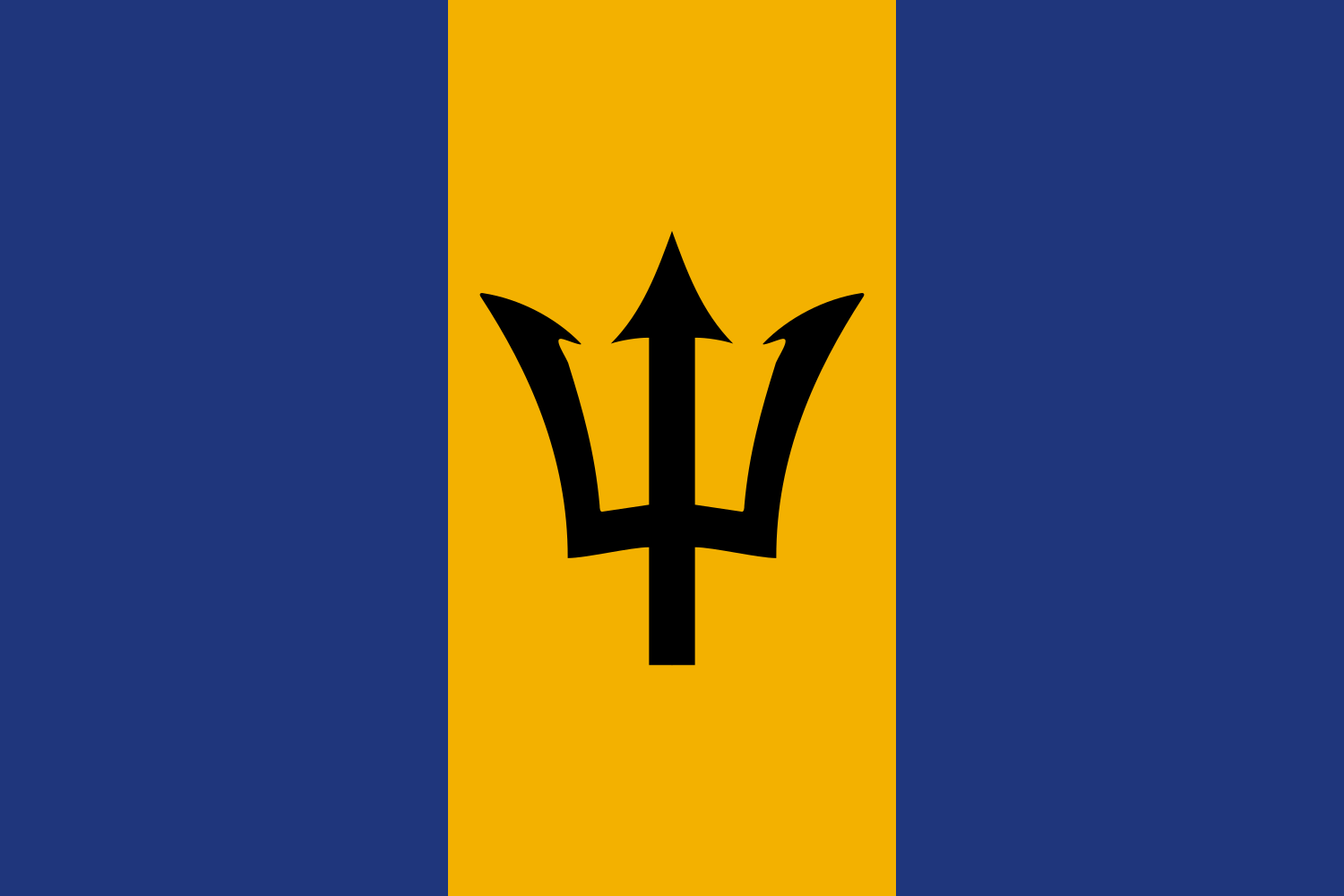
BarbadosCaribbeanVerified with official sourceStable2026-10-05
The Constitution gives a spouse a right to be registered as a citizen, but the length of marriage that earns it is not in the Constitution. Section 3A(1)(b), inserted in 2000, gives the right to a person who has been married to a citizen of Barbados and has cohabited with that citizen for such period as may be prescribed - and "prescribed" means prescribed by or under an Act of Parliament. The period is therefore in the Barbados Citizenship Act or in regulations under it, and the published copy of that Act is a scan we could not read. Two things the Constitution does say are worth knowing: the right survives the death of the citizen spouse before the period runs out, and it survives divorce or annulment once registration has happened. There is also an older provision, section 6, under which a woman who marries a citizen is entitled to be registered, which the Immigration Department still names on its forms.
Qualifying period of marriage
Such period as may be prescribed. The Constitution does not state it
Death of the citizen spouse before the period runs
Does not take away the right to be registered
Divorce or annulment after registration
Does not affect the citizenship
Oath of allegiance
Required before a certificate is issued, taken before an officer of the Immigration Department acting as a Justice of the Peace
Fee, as the Department charges
$300.00 on application, $1500.00 on approval
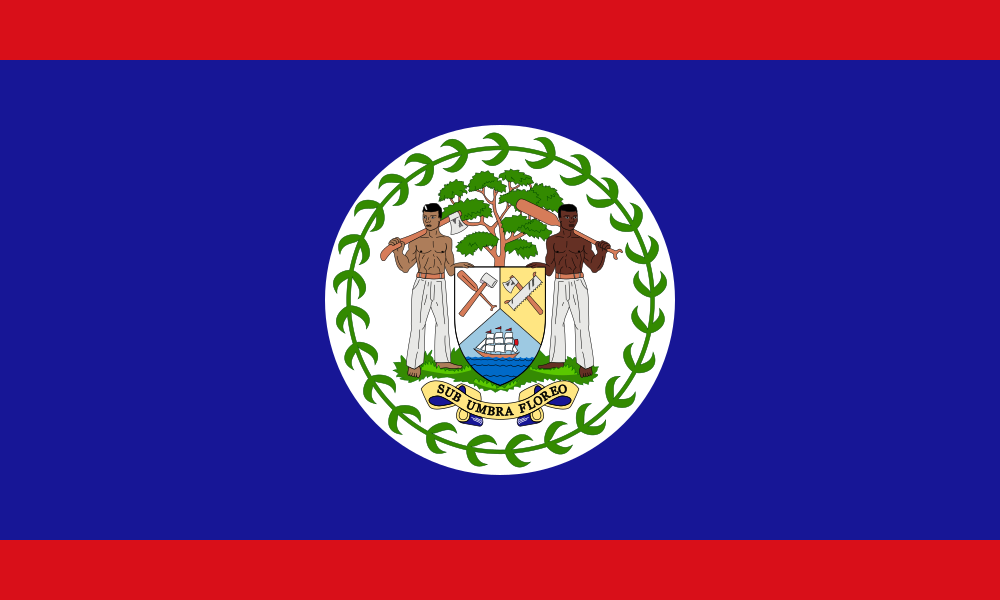
BelizeCentral AmericaVerified with official sourceStable2026-10-05
Marriage to a Belizean is the fastest route to a Belize passport that exists, and it skips permanent residence entirely: the Belizean Nationality Act lets the spouse, widow or widower of a citizen apply for registration as a citizen after one year resident in Belize. The Immigration Department describes the same rule as one year of marriage, which is not what the Act says - the Act counts residence in Belize, not time married. The Act also carries an unusual repair clause: if you marry a Belizean, you are deemed to have been legally resident from the date of the marriage even if you entered the country illegally. Day to day, a spouse already in Belize is covered by a dependent's permit under the Immigration Act.
Residence required before applying for citizenship as a spouse
A period of one year immediately preceding the date of the application
What the Immigration Department publishes
Married to a Belizean National for a minimum of 1 year
Permanent residence first
Not required
Illegal entry before the marriage
Cured from the date of the marriage
Spouse of a citizen by birth
Section 11 names a citizen by descent or registration
Permit for a spouse living in Belize
Dependent's permit
BoliviaSouth AmericaVerified with official sourceStable2026-09-27
Marriage to a Bolivian is handled under the family ground rather than as a category of its own. The permit's length follows the reasoned application rather than a fixed term, and the fee is the cheapest of any residence route Bolivia publishes: 260 UFV for a year. Its real advantage shows up later, at nationality: the spouse of a Bolivian can naturalise after two years of uninterrupted temporary residence instead of the three the ordinary route requires.
Category used
Temporary stay for family
Length
1, 2 or 3 years, set by the reasoned application
Fee, one year
260 UFVas of 2026-09-27
Fee, three years
460 UFVas of 2026-09-27
Permanent residence after
3 years, at 2510 UFV
Naturalisation after
2 years of uninterrupted temporary residence
Effect of widowhood or divorce
Nationality once acquired is not lost
Unmarried partners
A judicially recognised free union counts
BrazilSouth AmericaVerified with official sourceStable2026-09-27
A spouse or partner of a Brazilian, or of someone who already holds Brazilian residence, is granted residence by family reunion, and the regulation is explicit that it applies without any discrimination - a stable union counts on the same footing as a marriage, and the sexes of the partners are not a condition. Where the Brazilian relative holds indefinite residence the permit is indefinite too. The naturalisation clock is the shortest Brazil offers: a spouse or partner of a Brazilian needs one year of residence rather than four.
Relationships covered
Spouse or partner, without discrimination
Term where the Brazilian partner is a citizen
Indefinite
Work
Any activity, including paid work, on equal terms with Brazilians
Naturalisation after marriage to a Brazilian
One year of residence
Who cannot call a spouse over
Someone whose own residence is by family reunion or provisional
Route to indefinite residence otherwise
Four years
ChileSouth AmericaVerified with official sourceMonitor - can change2026-09-27
Marriage to a Chilean, or to a foreigner who already holds permanent residency, opens the family reunification permit - one of the few Chilean residence permits that can be applied for from inside the country rather than from abroad. Two features set it apart from every other route. The application is not yours to file: the Chilean spouse or permanent resident lodges it in their own name with their Chilean digital identity. And the route does not exist if your spouse holds only temporary residency - in that case you come in as their dependant, which is a weaker permit tied to theirs.
Who qualifies
Spouse, or partner in an arrangement equivalent to marriage, of a Chilean or a permanent resident
Where you apply
From inside Chile or from abroad
Who files it
Your Chilean or permanent-resident spouse, not you
Paid work
Permitted
Spouse holds only temporary residency
This route does not apply - the dependant permit does
Leads to permanent residency
Yes, and the statute protects that for this category
Normal wait for permanent residency
24 months of temporary residency
Possible reduction
Down to 12 months on family ties to a Chilean or a permanent resident
Cost of permanent residency for the spouse of a Chilean
Exempt from payment
Naturalisation afterwards
2 years of continuous residence as a permanent resident, if married at least 2 years, the marriage registered in Chile, and living in a common home
Renewal
The relationship must still be current
ColombiaSouth AmericaVerified with official sourceMonitor - can change2026-09-27
Marriage to a Colombian opens a route, but the application is built around proving you actually live together rather than around the certificate. The Colombian spouse writes the request themselves, gives their address and phone number, and the authority can demand further proof or call either of you to an interview. The marriage certificate must have been issued within the three months before you apply.
Marriage certificate
Issued within the last 3 months
Who writes the request
The Colombian spouse
Interviews
The authority may call one, in person, by video or by phone
Years to permanent residency
3
Costa RicaCentral AmericaVerified with official sourceStable2026-10-04
Marriage to a Costa Rican leads to temporary residency, not to permanent residency, and the grant is expressly conditional. Article 73 of the migration law gives one year, and renewal each year requires proof that the couple are actually living together. After three consecutive years of that, the status becomes permanent. The law also requires something unusual at the front end: both spouses must demonstrate that they know each other, obligatoriamente y fehacientemente, before entry or stay is granted at all. A marriage celebrated abroad has to be registered with the Costa Rican Civil Registry, and a de facto union needs a judge's recognition rather than a declaration.
Status granted
Temporary residency, conditional and temporary, for 1 year at a time
What each renewal requires
Proof of conjugal cohabitation, year by year
Permanent residency after
3 consecutive years of renewals
Naturalisation after
2 years married and 2 years resident in the country
De facto union
Accepted, but only on a judge's recognition
Failure to keep proving cohabitation
An order to leave the country
First application fee
US$50
CubaCaribbeanVerified with official sourceActively changing right nowlast checked 2026-10-06
Marriage to a Cuban is the first ground listed for permanent residence, and the law puts an unregistered affective de facto union on the same footing provided it is recorded before a notary or recognised by a court and entered in the register. The Cuban partner must have effective residence in the country, which is a presence test rather than a matter of holding a Cuban passport. The ground also carries minor children and minor grandchildren of two foreign parents who belong to the applicant's family nucleus. It does not shorten the road: the applicant still passes through a year of provisional residence and still pays the thousand-dollar deposit, and marriage only shortens naturalisation, from five years of permanent residence to two.
Marriage ground
Permanent residence, Ley 171 art. 49(a)
De facto union
Equal footing, if notarised or judicially recognised and registered
Condition on the Cuban partner
Effective residence in Cuba
Children and grandchildren
Minors of two foreign parents in the family nucleus
Guarantee deposit
USD 1000 per person
Provisional residence first
1 year
Decision on provisional residence
180 working days
Naturalisation after marriage
2 years of permanent residence
DominicaCaribbeanVerified with official sourceMonitor - can change2026-10-05
Marriage to a Dominican is a route to citizenship, not to residence, and it is a slow one. Section 6(a) of the Citizenship Act lets the Minister register the spouse of a citizen after three years of residence or government service immediately before the application, with good character, adequate English, knowledge of a citizen's responsibilities and an intention to go on living here. Three years is a year less than Dominica asks of nobody else and four less than the seven the Constitution asks of a Commonwealth citizen - but it is discretionary throughout: the section says the Minister "may" register, and lets him accept a shorter period in the special circumstances of a case. While the three years run, the spouse has no status of his own: he holds a visitor permit or a section 9 permit like any other foreigner.
Residence before registration as a citizen
3 years
Is it an entitlement?
No
Shorter period
At the Minister's discretion
Language and knowledge test
Adequate English and knowledge of a citizen's responsibilities
Residence status for the spouse while waiting
None of its own
Registration fee charged by the Ministry
EC$2,000, plus EC$250 on application
Spouse definition in the investment Regulations
Partner of the opposite sex by marriageas of 2024-06-28
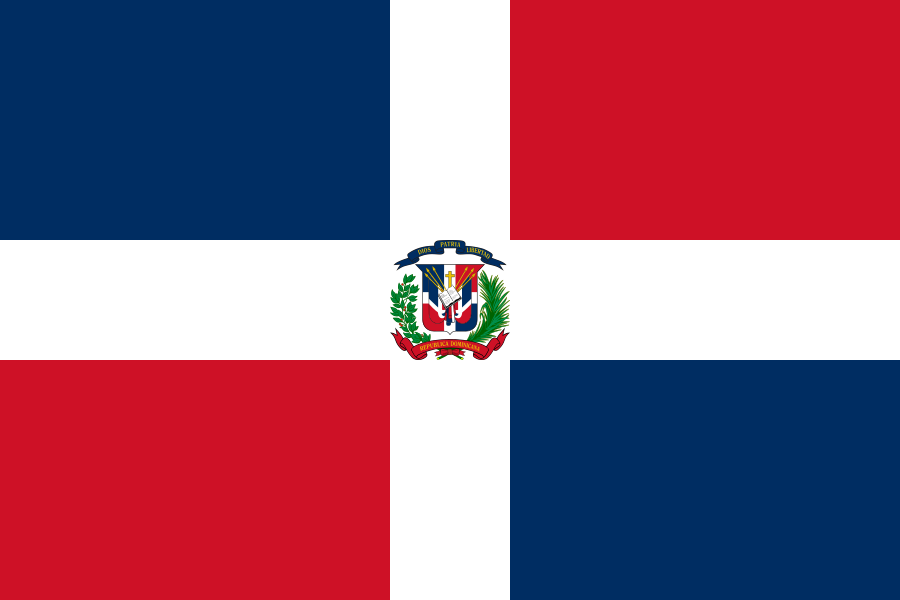
Dominican RepublicCaribbeanVerified with official sourceStable2026-10-06
Dominican law treats marriage as a question about nationality first and about residence second, and it is much more generous on the first than on the second. The Constitution makes a foreign spouse of a Dominican eligible for Dominican nationality outright, provided they opt for it and meet the conditions the law sets; the 1948 naturalisation statute cuts the ordinary two years of residence down to six months for someone married to a Dominican. Residence itself has no marriage category of its own: the migration law admits relatives of Dominicans as permanent residents under the family limb of article 33, and the regulation runs that through the same documentary process as every other residence. The naturalisation provisions are written in the language of 1948 and are expressly gendered; we quote them as they stand.
Residence category
Relative of a Dominican
Residence for naturalisation after marriage
6 months
Constitutional route
Nationality by marriage, on opting for it
Migration service certificate for naturalisation by marriage
RD$2,000.00
Relatives covered by the residence limb
Spouse and children who are minors or unmarried
The 1948 wording
Gendered
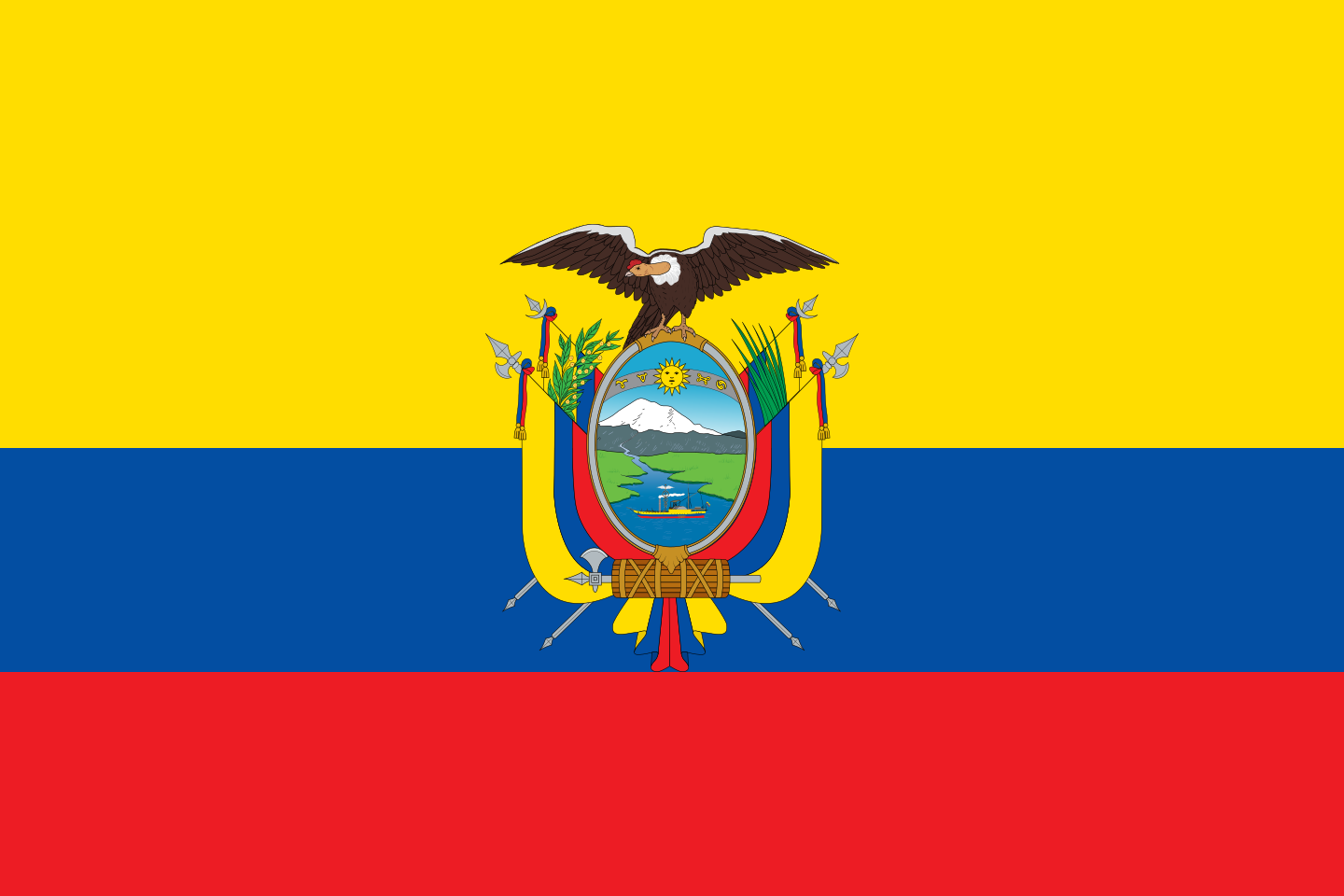
EcuadorSouth AmericaVerified with official sourceStable2026-09-21
Marriage or a legally recognised de facto union with an Ecuadorian, or with a foreigner who already holds permanent residence, is a direct ground for permanent residence with no waiting period. A de facto union counts on the same footing as a marriage provided it is registered with the civil registry. The application is backed by the civil registry certificate and an interview, and a marriage entered into to obtain status is punished by revocation of the visa. Naturalisation on the back of the marriage is a separate step and needs two years.
Status granted
Permanent residence, directly
Waiting period before applying
None
De facto union
Counts, if registered with the civil registry
Partner may also be a foreigner
Yes, if they hold permanent residence in Ecuador
Interview
Required
Sham marriage
Visa revoked, plus the sanctions in the migration law
Naturalisation on the same marriage
2 years from the marriage or from its registration
Residence kept if the relationship ends
Yes, where it ends for reasons attributable to the sponsoring partner
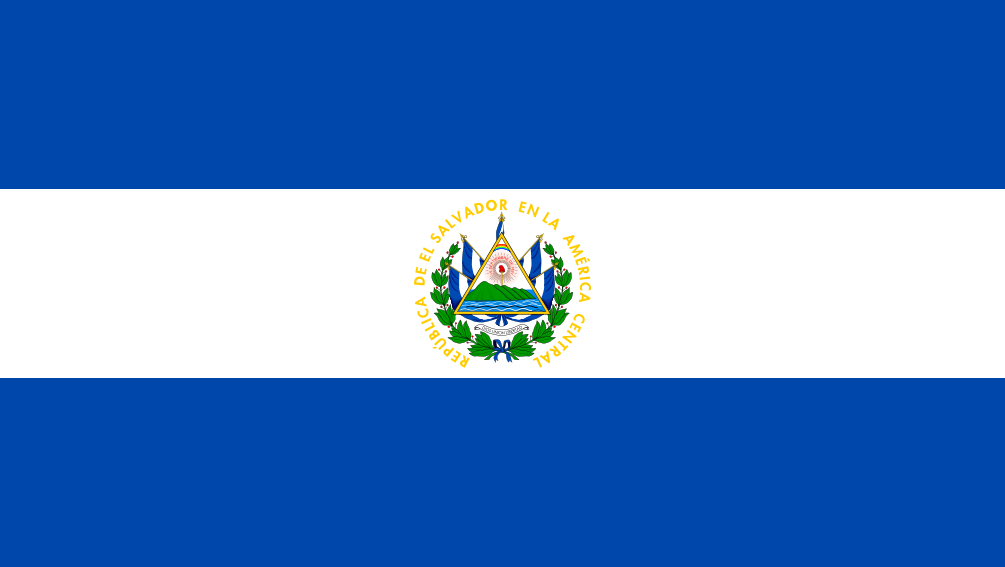
El SalvadorCentral AmericaVerified with official sourceStable2026-10-04
Marriage and an unmarried union are treated alike, and the route is unusually generous at the point where most countries are harshest: the law says the foreign spouse keeps the temporary residence even after the marriage is dissolved or the Salvadoran spouse dies, and a partner in an unmarried union keeps it to the end of its term. The price of that is a check at the front: the directorate is required to verify family roots and to ask for further information to prevent fraud of law. Two years of temporary residence, renewable; permanent residence after one uninterrupted year of it; naturalisation after two years of residence counted either side of the wedding. The Constitution and the migration law agree on that last figure, which they do not always.
Grant
Up to 2 years, renewable, multiple entry
Unmarried union
Treated the same as marriage
If the marriage ends or the spouse dies
The temporary residence is kept
If an unmarried union ends
Kept until the permit expires
Time to permanent residence
1 uninterrupted year of temporary residence
Time to naturalisation
2 years of residence
When those two years may be counted
Before or after the wedding
Anti-fraud check
Mandatory verification of family roots
GrenadaCaribbeanVerified with official sourceMonitor - can change2026-10-05
Marriage to a Grenadian is one of the strongest claims in this comparison, and it skips residence entirely. The Constitution itself says a person married to a citizen is entitled to be registered as a citizen, and so does the Citizenship Act; both use the word entitled rather than may, and neither imposes a waiting period, a residence requirement or a language test. The constitutional provision goes further still - it reaches a person who has been married to someone who was a citizen during the marriage, so a widow or widower, and a divorced spouse, keep the claim. The only conditions are the oath of allegiance for an alien and an application in the manner Parliament prescribes. There is one exception, and it is in the grandparent route.
Qualifying period
None
Residence in Grenada
Not required
Character of the right
An entitlement
After the death of the Grenadian spouse
Claim survives
Capacity
Full age not required
Exception
Spouse of a citizen registered through a grandparent
Immigration status pending registration
Not provided for
GuatemalaCentral AmericaVerified with official sourceStable2026-10-04
A year of registered marriage or declared de facto union with a Guatemalan is a ground for permanent residence outright - no temporary stage, no probationary renewals. Both the marriage and the union have to be entered in the national registry, and the Guatemalan spouse's birth certificate has to carry the annotation of it. Before that year is up the marriage still does something: six months of registered marriage moves a consular-visa nationality to visa-exempt and a consulted-visa nationality to consular. The spouse of a Guatemalan can also apply for a work permit in their own name rather than through an employer, and pays nothing for it. If the marriage ends, the status does not simply lapse - but it does have to be ratified, and ratification means qualifying for some other kind of permanent residence.
Marriage before permanent residence
1 year or more
Status granted
Permanent residence, indefinite term
De facto union
Treated the same as marriage, if declared and registered
Visa category change for a spouse
6 months of registered marriage
Work permit for the spouse of a Guatemalan
In their own name, no employer sponsorship
Work permit fee in that case
None - exempt
If the marriage ends
Ratification of the status must be applied for
Residence fee
USD 700.00
GuyanaSouth AmericaVerified with official sourceStable2026-10-06
Article 45 of the Constitution says that a person who marries a citizen of Guyana shall be entitled, on applying and taking the oath, to be registered as a citizen. It is an entitlement rather than a discretion, and it carries no residence requirement, no waiting period and no language or integration condition - the only qualification is whatever exceptions Parliament prescribes in the interests of national security or public policy. On the immigration side the Act gets there by a different road: a spouse is a dependant, a dependant of a citizen is deemed to belong to Guyana, and a person who belongs to Guyana cannot be a prohibited immigrant. That removes the bar at the border but does not itself hand over a permit, so the practical sequence is to enter, marry or arrive married, and register. The Ministry of Home Affairs asks for two sworn recommendations from Guyanese of good standing, an income tax liability statement and a National Insurance compliance statement.
Residence required before registering
None stated in the Constitution
Waiting period after the marriage
None stated
Nature of the right
An entitlement, subject to exceptions prescribed in the interests of national security or public policy
Status of a citizen's spouse at the border
Deemed to belong to Guyana, and therefore not a prohibited immigrant
Recommendations required by the Ministry
Two, from Guyanese nationals of good standingas of 2026-10-06
Newspaper notice
Not required on the marriage routeas of 2026-10-06
Definition of spouse for immigration
A spouse, unless living apart under a deed of separation or the decree of a competent court
HaitiCaribbeanVerified with official sourceMonitor - can change2026-10-06
Haitian law as we read it gives the spouse of a Haitian national no residence category and no shortened route. The immigration law has one permis de séjour and does not ask who an applicant is married to. The only concession we found anywhere is in the Labour Code: article 312(b) exempts from the work permit and the employment permit a foreigner of either sex married to a Haitian national who can show at least three years of uninterrupted residence in the country. The condition is residence, not marriage: three years of living in Haiti, not three years of being married. What we could not establish is the nationality side. The Constitution as amended in 2011 abrogated its own naturalisation articles and left acquisition of Haitian nationality to be settled by law, and the law in question - the decree of 6 November 1984 - is one we could not obtain, so we cannot say what marriage does for nationality.
Spouse residence category
None found
Work permit exemption for a spouse
After three years of uninterrupted residence
Naturalisation by marriage
Not established
HondurasCentral AmericaVerified with official sourceMonitor - can change2026-10-04
Marriage or a recognised de facto union with a Honduran is one of the eight residence categories, and the law attaches no waiting period to it. The regulation does: it says residence may be acquired three years after the marriage was celebrated or the union recognised. That is a condition the law it implements does not contain, and it is the sharpest divergence we found in the Honduran material. The status survives the Honduran spouse's death, and ends on divorce - though the law gives the foreign spouse the right to move to another status, and a route back if there are Honduran children. On the nationality side the Constitution is far more generous than the residence rules: a foreigner married to a Honduran by birth is eligible to naturalise, with no residence period stated at all.
Waiting period in the law
None stated
Waiting period in the regulation
3 years
Residence fee
USD 200
On divorce
The status is lost from the date of the decision
On the spouse's death
The status survives
Renewal
An original marriage or union certificate
Naturalisation
Eligible as the spouse of a Honduran by birth
JamaicaCaribbeanVerified with official sourceStable2026-10-06
Marriage to a Jamaican is not a residence permit in Jamaica; it is an entitlement to citizenship. Section 7 of the Constitution says any man or woman who marries a Jamaican citizen is entitled, on applying and taking the oath, to be registered as a citizen. There is no waiting period and no residence requirement in the section. There are two ways to be refused: satisfactory evidence that the marriage was entered into primarily to acquire citizenship or that the couple have no intention of living permanently together, and a conviction for an offence specified by a law providing for that denial. In the meantime the spouse lives on an extension granted by the Agency and works on a Marriage Exemption Certificate from the Ministry of Labour rather than a work permit. The Agency says it prepares a compliant registration application for the Minister within twenty-four months.
Waiting period before registration
None in the Constitution
Residence requirement
None in the Constitution
Time the Agency takes to put a compliant application to the Minister
Marrying a Mexican does not produce permanent residence, and the guidelines say so in the bluntest terms available: the spouse of a Mexican may in no case be issued a permanent residence visa. The route is two years of temporary residence first, and only then permanent residence, provided the marriage still exists. Unmarried partners in a recognised equivalent relationship are on exactly the same footing. Naturalisation, separately, needs two years of married life in a shared home in Mexico.
Permanent residence straight away
Not available to a spouse of a Mexican
Time as a temporary resident first
2 years
When the two years start
When the temporary residence is granted on the strength of the relationship, not on the wedding date
Unmarried partners
Treated the same, if the relationship is recognised by the competent authority where it was formed
Naturalisation after marriage
2 years of living together in the marital home in Mexico
Applications accepted inside Mexico
Yes - family unity is one of only three grounds on which the Institute takes a visa application
Change-of-status fee
MXN 1,847.13
Residence card fee discount
50% where the stay rests on family unityas of 2025-11-07
NicaraguaCentral AmericaVerified with official sourceStable2026-10-05
Marriage or a registered stable union with a Nicaraguan leads straight to permanent residence, but not on the day of the wedding: the regulation and the migration directorate both require the marriage or the union to have lasted at least two years before they will take the application. The residence survives the death of the Nicaraguan spouse and falls with a divorce, from the date of the resolution rather than from the end of the relationship, and it can be cancelled if the foreign spouse stops meeting a maintenance order. Naturalisation follows after two years of continuous residence rather than the ordinary four. The fee is the full one: the halved line on the directorate's price list covers the family of an immigrant or an investor, not the spouse of a Nicaraguan.
Minimum duration of the marriage or union
2 years
Status granted
Permanent residence
Card validity
5 years, renewable
Fee
C$ 18,312.15
Naturalisation after
2 years of continuous residence
On divorce
Status lost from the date of the resolution
On the death of the spouse
Residence is kept
Failing a maintenance order
Status may be cancelled and a date set to leave
A marriage found to be for migration purposes
Ground for revoking the residence
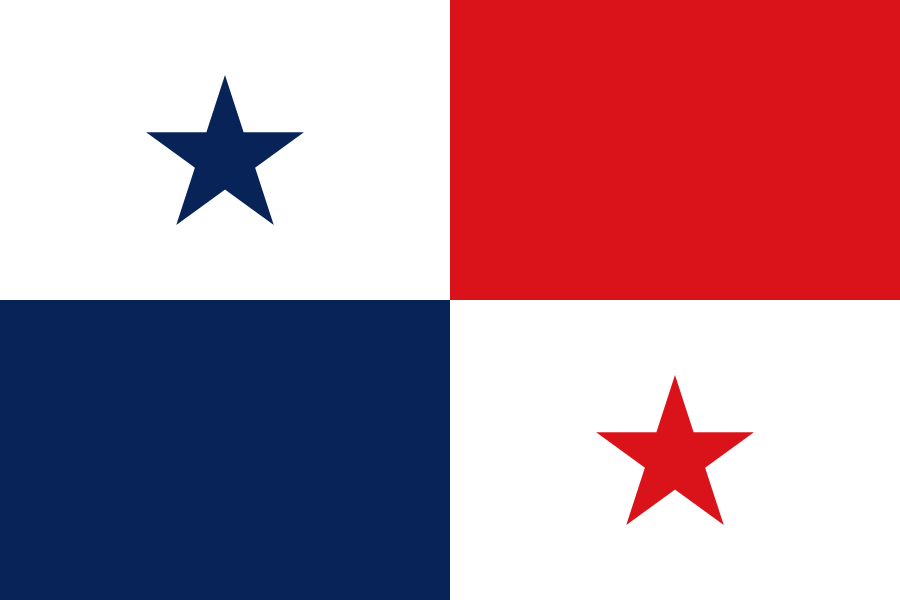
PanamaCentral AmericaVerified with official sourceStable2026-10-04
Marrying a Panamanian does not give you the right to live in Panama. The regulation says so in terms, and it is one of the bluntest sentences in Panamanian migration law: the marriage confers no right of residence by itself, and the Servicio Nacional de Migración may refuse entry or residence on grounds of health, morality, public security, the national economy or social need. What the marriage does is open a provisional two-year permit, conditional on genuinely living together, backed by a marriage interview and the possibility of a home visit. Permanence is a second application after those two years. The decree-law also makes marrying solely to obtain residence an express ground for cancellation.
Does marriage confer residence?
No, expressly
Provisional stage
2 years
Interview
Required
Home visit
At the agency's discretion
Treasury fee
B/.250
Repatriation deposit
Not charged
If widowed or divorced during the two years
May still apply, with children of the marriage
Marriage of convenience
Express cancellation ground
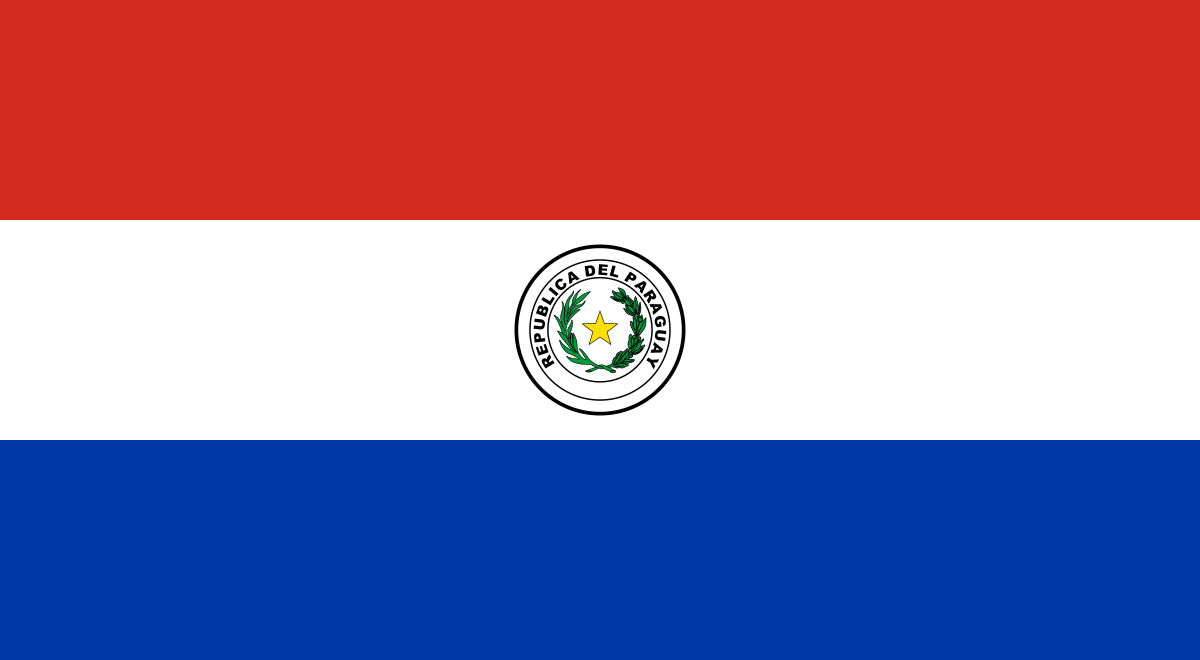
ParaguaySouth AmericaVerified with official sourceMonitor - can change2026-09-21
Marriage to a resident does not produce a residency of its own. A spouse applies for the same temporary residency as anyone else and, at the permanent stage, answers the solvency question as a dependant: the marriage certificate, legalised or apostilled, and a copy of the other spouse's Paraguayan identity card or residency card. The only marriage-based shortcut in the law is narrower than it first looks - it runs through a returning Paraguayan national, not through any Paraguayan spouse. Both spouses signing, and both holding or applying for residency at the same time, is also what the directorate asks when children are involved.
Dedicated spouse visa
None
How a dependent spouse proves solvency
Marriage certificate plus the supporting spouse's Paraguayan identity or residency card
Shortcut to permanent residency for a spouse
Only through a repatriated Paraguayan national
Fee for the spouse of a repatriated national
Exempt
Two-year temporary stage
Applies to a spouse like anyone else, outside the repatriation route
PeruSouth AmericaVerified with official sourceMonitor - can change2026-09-21
Family of a Peruvian or of a foreign resident get a residence status that permits work from the outset, dependent or independent, with no separate permit. How long it lasts depends on whose family you are: up to two years for the family of a Peruvian, one year for the family of a foreign resident. Since 2023 Migraciones has an express power to assess how solid a marriage or civil partnership is before granting the status, and the amended law ties the family member's permission to the resident's own.
Family of a Peruvian
Up to 2 years
Family of a foreign resident
1 year
Work
Permitted, dependent or independent, without a further permit
On separation or death
The holder does not lose the status already granted
Relationship scrutiny
Migraciones may assess the solidity of the marriage or partnershipas of 2023-11-14
Alternative status on losing the link
Especial Residente, extendable onceas of 2023-11-14
Marriage does not get you residence here. It gets you citizenship. Section 92(1)(a) of the Constitution entitles any person married to a citizen to be registered as a citizen on application, with no qualifying period of marriage, no residence requirement and no language or civics test - the shortest route to citizenship in this entire comparison, and a constitutional entitlement rather than a Ministerial discretion. What stands between the entitlement and the certificate is the Citizenship Act's list of grounds on which the Minister may refuse, and seven of its fourteen paragraphs are about marriages: entered into primarily to get citizenship, no longer subsisting, annulled, under divorce proceedings, under a deed of separation, or where the parties have stopped living together.
Qualifying period of marriage
None
Residence required
None
Nature of the right
A constitutional entitlement
Spousal residence permit
None, except for a work permit holder's spouse
Marriage-related refusal grounds
7 of the 14 in section 3(11)
If your spouse acquired citizenship by investment
You cannot register under section 92(1)(a)
Saint LuciaCaribbeanVerified with official sourceStable2026-10-05
Marriage leads to citizenship rather than to residence. The Citizenship of Saint Lucia Act gives a spouse of a citizen an entitlement to be registered, with no qualifying period of residence attached to it, which makes Saint Lucia one of the quicker routes in the region on paper. What it does not give is an immigration status in the meantime: there is no spousal permit in the Immigration Act, so a spouse waiting on registration is on an ordinary section 12 permit with the ordinary one-year ceiling. The citizenship-by-investment route treats a spouse separately again - a spouse of an existing citizen can be added for US$35,000, and a spouse married after the original application can be added within five years. The registration provisions are quoted below, and they are not symmetrical: a wife's entitlement under section 6(1)(a) stands on its own, while a husband's under section 6(2)(a) is subject to the Minister's grounds for refusal in section 6(6).
Residence required before registering as the spouse of a citizen
None stated
Spousal immigration permit
None
Adding a spouse to a citizenship by investment grant
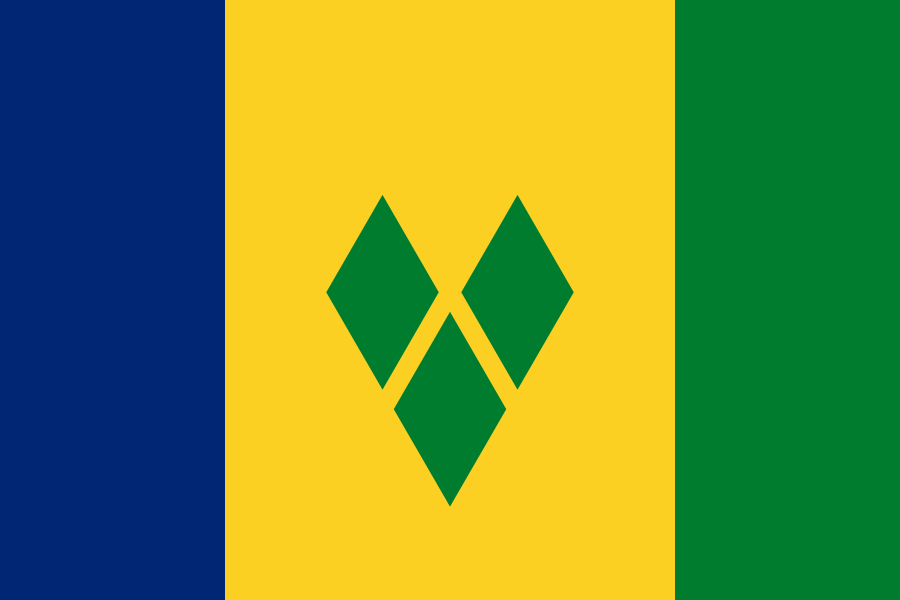
The Constitution makes marriage to a citizen an entitlement to registration rather than an application a minister weighs, and it states no qualifying period at all: no two years of marriage, no residence, no interview appears in the text. It does it twice over, once for a wife in section 93(1)(a) and once for a husband in section 93(2)(a), a 1979 drafting shape that reaches the same result by two routes. A former spouse is covered too, provided the other person was a citizen at some time during the marriage. What the Constitution does not do is say how to apply: section 93(3) leaves the manner to be prescribed by or under an Act of Parliament, and that Act is Chapter 117, which is not published.
Status of the claim
An entitlement to be registered
Qualifying period of marriage
None stated in the Constitution
Residence requirement
None stated in the Constitution
Former spouses
Covered
Oath of allegiance
Required of an alien or British protected person aged twenty-one or over
Procedure, fee and forms
Not published
SurinameSouth AmericaVerified with official sourceMonitor - can change2026-10-06
The nationality law gives a marriage route that is not a residence route at all but a route straight to nationality, and it is written in one direction only. Article 12 provides that a non-Surinamese woman whose husband was Surinamese when the marriage was contracted acquires Surinamese nationality by declaring her will to that effect to the Procurator-General, provided the marriage subsists on the day of the declaration and the man is still Surinamese. There is no corresponding provision for a husband. The aliens department applies it as an option right of marriage available to aliens who can show they have been married to a Surinamese national for at least two years, which is both wider than the statute in the sex of the applicant and narrower in requiring a duration the statute does not mention. For residence as such there is no spouse permit: a spouse applies for the ordinary residence permit and, after at least a year of it, may join the holder of a settlement permit or a Surinamese national on a co-settlement.
Spouse residence permit
None as a category; the ordinary two-year permit is used
Co-settlement
After at least one year of residence permit, for family of a settlement-permit holder or of a Surinamese national
Nationality by declaration
Immediate on the declaration, with no residence period in the statute
Marriage duration in the statute
None
Marriage duration the agency applies
Two years
Who the statute covers
A wife only
Where the declaration is made
The Procurator-General at the Court of Justice, or the Surinamese mission in the country where the declarant is
The BahamasCaribbeanVerified with official sourceMonitor - can change2026-10-06
Marriage to a Bahamian gives a spouse a permit, not a status. Section 30(2) lets the Board grant a resident spouse permit in its absolute discretion to a person married to a citizen, not themselves a citizen or permanent resident, and not living apart under a court decree or deed of separation. Section 30(3), as amended in 2015, protects the permit once it is granted: where there are children of the marriage it stays valid to its expiry date even if the Bahamian spouse dies or the marriage ends, and may be extended while an application for another status is processed; where there are no children it still survives to expiry. Permanent residence is a separate step under section 14 and needs five years of continuous cohabitation, after which the Board may grant a certificate that cannot carry a condition restricting work. Citizenship is a third step and is open to a wife but not to a husband. Entering a marriage to obtain an immigration benefit is an offence under section 32B.
Resident spouse permit
Granted in the Board's absolute discretion, from the date of grant
Permit fee
$300 a year, or $1,500 for five years
Cohabitation needed for permanent residence
Not less than five years, continuous
Work rights on that certificate
Unconditional; the certificate may not restrict gainful employment
Citizenship by marriage
Open to a wife of a Bahamian man only
Fraudulent marriage
An offence; deportation for a non-citizen, up to ten thousand dollars or five years for a citizen or permanent resident
Marriage opens a residence route and no citizenship route. Section 6(1)(c) of the Immigration Act puts the spouse of a citizen or resident on the list of people the Minister may grant resident status to if he thinks fit, with none of the qualifying period that paragraph (a) imposes on everyone else - so the spouse route is the one place in the Act where five years of residence is not asked for. It is still discretionary, and section 6(2) still requires legal entry, absence from the prohibited classes and a police certificate of good character. What marriage does not do is confer citizenship. The Citizenship Act has routes by descent, adoption, registration of Commonwealth citizens, registration of minors, restoration and naturalisation, and no route by marriage at all; section 11(1) mentions marriage only to say that acquiring another citizenship by marriage does not cost you this one. A married spouse who wants to be a citizen uses registration or naturalisation like anyone else, counting the residence the marriage made possible.
Residence qualifying period for a spouse
None stated
Spouse of a resident
Also covered
Citizenship by marriage
None
Citizenship after marriage
Registration at five years for a Commonwealth citizen, or naturalisation at twelve months plus five of the preceding seven years
Jointly owned land
No licence needed where the spouse is a CARICOM citizen resident in Trinidad and Tobago
Divorced spouse of a CARICOM skilled national
Keeps the rights after five years of living together
UruguaySouth AmericaVerified with official sourceMonitor - can change2026-09-21
A family link to a Uruguayan goes straight to permanent residency, not to a temporary permit first. The list of qualifying relationships is unusually wide - child, spouse, unmarried partner or sibling - and unmarried partnership counts on the same footing as marriage, provided the concubinato is registered by court order under Law 18.246.
Grants
Permanent residency directly
Qualifying relationships
Child, spouse, unmarried partner, sibling
Sibling of a Uruguayan
Qualifies
Unmarried partners
Qualify, if the concubinato is registered
Relationship certificate
Under a year old if foreign
VenezuelaSouth AmericaVerified with official sourceMonitor - can change2026-10-06
The family visa for a Venezuelan's relatives, TR-FV, runs a year with multiple entries and no limit on how long you may stay, and is extended inside the country. It reaches further than a spouse: minor children, parents and parents-in-law are in the same article. The resolution and the foreign ministry disagree about one thing that decides whether you qualify. The resolution gives the visa to a spouse only where the marriage took place abroad and was registered at a Venezuelan consulate, and requires the family to travel with the Venezuelan to settle in the country. The ministry's own page drops the travel condition and accepts a marriage celebrated in Venezuela as well. Naturalisation by marriage is separate and slower: five years from the date of the marriage.
Visa validity
One year, multiple entries, no limit on length of stay
Who it reaches
Spouse, unemancipated children under 18, parents and parents-in-law
Time to Resident status
One uninterrupted year, then at the interior ministry's discretion

 Antigua and Barbuda
 Argentina
 Barbados
 Belize
 Bolivia
 Brazil
 Chile
Chile Colombia
 Costa Rica
 Cuba
Cuba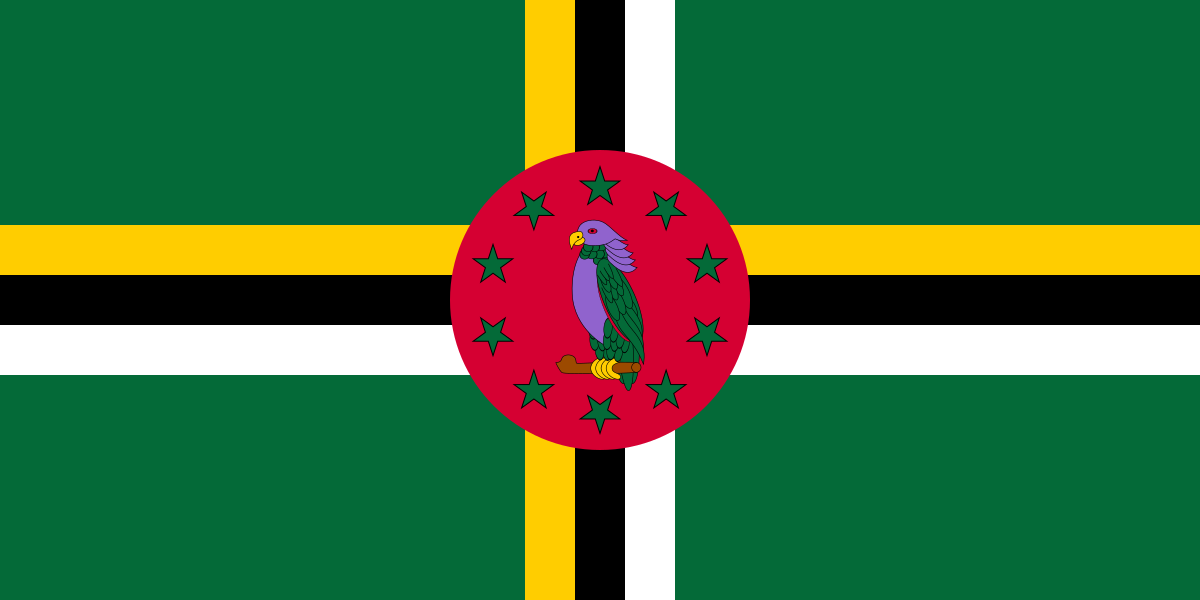 Dominica
 Dominican Republic
 Ecuador
 El Salvador
 Grenada
 Guatemala
 Guyana
 Haiti
Haiti Honduras
 Jamaica
 Mexico
 Nicaragua
 Panama
 Paraguay
 Peru
Peru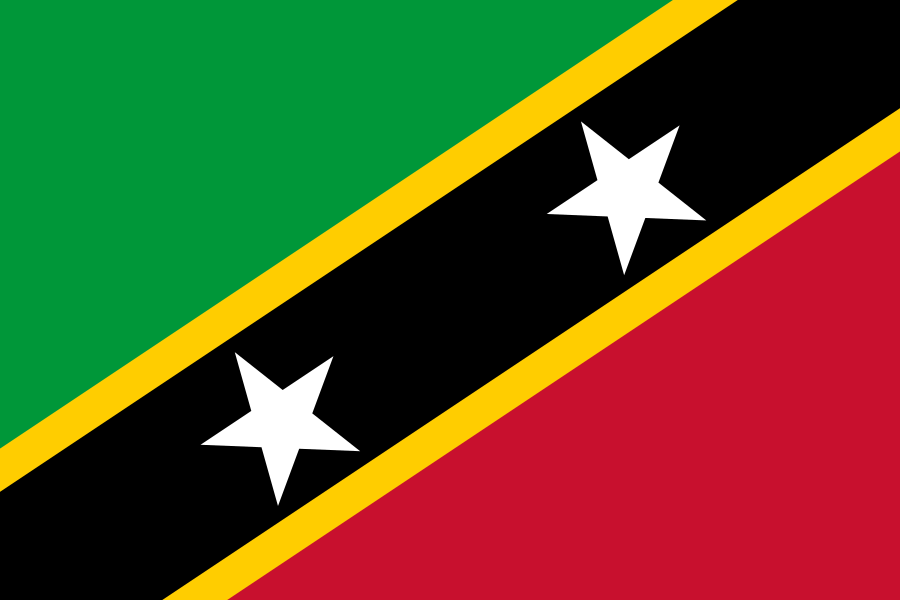 Saint Kitts and Nevis
 Saint Lucia
 Saint Vincent and the Grenadines
 Suriname
 The Bahamas
 Trinidad and Tobago
 Uruguay
 Venezuela